
Global Single Use Bioreactors Market Size, Share, Trends & Growth Analysis Report Segmented By Product Scope (Single-Use Bioreactor Systems, Single-Use Media Bags, Single-Use Filtration Assemblies, Other Products), Type, Type of Cell, Molecule Type, Application, End-use, Usage Type And Regions (North America, Europe, Asia-Pacific, Latin America, Middle East and Africa), 2026-2034
The Single Use Bioreactors Market size was valued at USD 5.63 Billion in 2025. It is projected to grow from USD 6.62 Billion in 2026 to USD 24.39 Billion by 2034, at a CAGR of 17.70% during the forecast period.
The single-use bioreactors market is witnessing substantial expansion, primarily fueled by the increasing demand for biopharmaceuticals, including monoclonal antibodies and vaccines. These disposable systems offer significant advantages such as reduced cross-contamination risks, enhanced operational flexibility, and quicker turnaround times compared to traditional stainless-steel bioreactors. This accelerates drug development and production, especially for novel therapies. Furthermore, the rising focus on personalized medicine and cell and gene therapies creates a robust opportunity for single-use bioreactors, as they facilitate scalable and adaptable manufacturing processes crucial for small-batch production. Continuous technological advancements, particularly in sensor integration and automation, are also contributing to their widespread adoption in biomanufacturing.
Market Dynamics
Single Use Bioreactors Market Drivers
- Growing Biologics and Biopharmaceutical Production: The escalating global demand for biologics and biopharmaceuticals, including vaccines and monoclonal antibodies, is a primary driver for the single-use bioreactors market. These advanced therapies require efficient and flexible manufacturing solutions. The biologics market was estimated at $421.1 billion in 2024 and is projected to reach $732.4 billion by 2030. Single-use bioreactors offer rapid deployment and reduced turnaround times, which are critical for meeting the increasing production demands of these complex biological molecules, enabling biopharmaceutical companies to quickly scale up or down operations as needed, thereby accelerating time to market for life-saving drugs.
- Reduced Capital Expenditure and Operational Costs: Single-use bioreactors offer significant economic advantages over traditional stainless-steel systems by substantially reducing capital expenditure and ongoing operational costs. The elimination of costly and time-consuming cleaning-in-place and sterilization-in-place procedures, as highlighted by Alicat Scientific, leads to lower utility consumption and decreased labor requirements. This cost efficiency is particularly attractive for smaller biotechnology firms and contract manufacturing organizations, enabling them to invest in biomanufacturing capacity without the immense upfront costs associated with traditional facilities. The overall lifecycle cost benefits contribute significantly to the widespread adoption of single-use bioreactors across the industry.
- Enhanced Flexibility and Faster Turnaround Times: The inherent flexibility and rapid turnaround capabilities of single-use bioreactors are key drivers for their increasing adoption in biopharmaceutical manufacturing. These systems allow for quick changes between different products or cell lines without the risk of cross-contamination, a critical advantage in multi-product facilities. Single-use bioreactors offer a quicker and more affordable way to speed up bioproduction. This agility is invaluable for companies involved in research and development, process optimization, and the production of diverse biotherapeutics, enabling them to respond swiftly to market demands and accelerate the development timelines for new drugs.
- Increasing Emphasis on Minimizing Cross-Contamination Risk: The stringent regulatory environment and the critical need for product purity in biopharmaceutical manufacturing have intensified the focus on minimizing cross-contamination, a significant driver for single-use bioreactors. Disposable components inherently reduce the risk of contamination between batches, as they are discarded after a single use, eliminating the need for complex and error-prone cleaning validation. This inherent safety feature is a major advantage over traditional stainless-steel systems. The enhanced purity and sterility provided by single-use technologies contribute directly to improved product quality and patient safety, aligning with the rigorous standards set by regulatory bodies such as the Food and Drug Administration.
Single Use Bioreactors Market Opportunities
- Rise of Cell and Gene Therapies: The burgeoning field of cell and gene therapies presents a substantial opportunity for the single-use bioreactors market. These advanced therapeutic modalities often require specialized, small-batch manufacturing, where the flexibility and reduced contamination risks of single-use systems are highly advantageous. The global dermatological cell and gene therapy market is poised for exceptional growth at a 31.3% compound annual growth rate through 2030. Single-use bioreactors are ideally suited for these nascent and rapidly evolving production processes, enabling scalable and cost-effective manufacturing of personalized and highly potent cell and gene products, thereby accelerating their clinical development and commercialization.
- Adoption in Continuous Bioprocessing: The shift towards continuous bioprocessing in the biopharmaceutical industry offers a significant market opportunity for single-use bioreactors. Continuous processing enhances productivity, reduces manufacturing costs, and improves product quality by maintaining steady-state conditions. Single-use bioreactors are key enablers of this transition, providing the necessary flexibility and ease of integration for continuous manufacturing lines. Their disposable nature eliminates the time and cost associated with cleaning and sterilization cycles, making them highly compatible with the demands of continuous operations and driving their increased adoption in advanced biomanufacturing workflows.
- Integration of Advanced Automation and Digitalization: The growing trend of integrating advanced automation and digitalization in biomanufacturing provides a robust opportunity for the single-use bioreactors market. Automation streamlines operations, improves process control, and reduces manual intervention, leading to higher efficiency and reproducibility. Digital biomanufacturing is estimated to grow from $2 billion to $12.3 billion by 2035. Single-use systems, with their standardized designs and pre-sterilized components, are well-suited for automation. This integration allows for real-time monitoring, predictive analytics, and enhanced process optimization, addressing the industry's need for smart factories and more efficient production of complex biologics.
- Expansion into Emerging Markets: The expanding biopharmaceutical industries in emerging markets, particularly in Asia-Pacific, represent a significant growth opportunity for single-use bioreactors. These regions are rapidly investing in healthcare infrastructure and biomanufacturing capabilities to meet their growing healthcare demands. Single-use bioreactors offer a cost-effective and flexible solution for establishing new production facilities without the large upfront capital investment required for traditional stainless-steel systems. This allows local manufacturers to quickly build capacity and compete in the global biopharmaceutical landscape, driving the adoption of single-use technologies across these burgeoning markets.
Single Use Bioreactors Market Restrain & Challenges
- Waste Management and Environmental Concerns: A significant challenge for the single-use bioreactors market is the increasing volume of plastic waste generated, posing considerable waste management and environmental concerns. While single-use components offer operational advantages, their disposal contributes to landfill burden and necessitates specialized waste treatment. Although the Environmental Protection Agency highlights that bioreactor landfills can produce methane at a higher rate for energy recovery, the sheer volume of plastic waste remains a concern. The industry faces pressure to develop more sustainable disposal methods, such as recycling or biodegradable materials, to mitigate the environmental impact and ensure long-term viability of single-use technologies.
- Extractables and Leachables (E&L) Issues: Concerns surrounding extractables and leachables (E&L) from the polymeric materials used in single-use bioreactors pose a notable restraint on market growth. These compounds can potentially migrate from the disposable components into the cell culture medium and ultimately into the biopharmaceutical product, impacting product quality, safety, and efficacy. The U.S. Pharmacopeia highlights that E&L can adversely affect a drug's potency, stability, safety, and effectiveness. Rigorous testing and regulatory scrutiny are required to ensure that E&L levels remain below harmful thresholds, adding complexity and cost to the validation process and creating a significant challenge for manufacturers.
- Scalability Limitations for Large-Scale Production: Despite their advantages, single-use bioreactors currently face scalability limitations for very large-scale biopharmaceutical production compared to traditional stainless-steel systems. While capacities have increased, single-use bioreactors usually have a smaller working volume than conventional bioreactors. This can necessitate running multiple parallel single-use systems for high-volume products, which introduces additional operational complexities and potential increases in overall cost. While continuous advancements are pushing the boundaries of single-use bioreactor volumes, this limitation remains a challenge for manufacturers requiring immense production capacities for blockbuster biologics.
- Supply Chain Vulnerabilities for Specialized Components: The reliance on a limited number of specialized suppliers for critical raw materials and single-use components creates supply chain vulnerabilities for the single-use bioreactors market. Disruptions in the supply chain, such as those experienced during global events, can lead to shortages and price fluctuations of essential items like specialized media bags, sensors, and tubing. Leadvent Group emphasizes that reliance on single suppliers creates a bottleneck and exposes manufacturers to risks like shortages. This dependency can impact manufacturing timelines, increase production costs, and potentially delay the availability of vital biopharmaceutical products, posing a significant challenge for the industry.
Current Trends in the Single Use Bioreactors Market
- Advanced Sensor Integration: A key trend in the single-use bioreactors market is the integration of advanced, in-line sensors for real-time monitoring of critical process parameters. These disposable sensors measure variables such as pH, dissolved oxygen, temperature, and cell density directly within the bioreactor bag, eliminating the need for invasive sampling. Thermo Fisher Scientific has seen several advancements in single-use sensors and process analytical technologies. This capability provides real-time data, enabling tighter process control, optimized cell growth, and improved product quality. The integration of these sophisticated sensors enhances process understanding, reduces manual intervention, and supports a more robust and efficient biomanufacturing workflow, minimizing batch-to-batch variability.
- Increased Adoption of Perfusion Culture: The single-use bioreactors market is witnessing a growing trend in the adoption of perfusion culture techniques, particularly for achieving higher cell densities and increased volumetric productivity. Perfusion processes continuously supply fresh media and remove waste products, allowing cells to remain in an optimal growth phase for extended periods. This technique is gaining traction due to its ability to support continuous bioprocessing, leading to higher cell densities and consistent product quality. Single-use bioreactors, with their simplified setup and reduced cleaning requirements, are well-suited for perfusion operations, enabling more efficient and cost-effective production of biopharmaceuticals.
- Intensified Bioprocessing Strategies: The trend towards intensified bioprocessing strategies is significantly impacting the single-use bioreactors market. Intensified processes aim to maximize productivity within a smaller footprint by increasing cell densities and optimizing process parameters, reducing overall manufacturing costs and time. This shift is being fueled by the ability of continuous processing to enhance yield and increase overall productivity. Single-use bioreactors play a crucial role in enabling these intensified approaches due to their flexibility, ease of integration, and ability to handle high cell densities, making them ideal for upstream process intensification and accelerating biopharmaceutical production.
- Digitalization and Data Analytics: The ongoing digitalization of biomanufacturing processes, coupled with advanced data analytics, is a transformative trend in the single-use bioreactors market. This involves the use of digital software and platforms, such as process analytical technology, data analysis software, and digital twins, to improve overall biomanufacturing. Digitalization enables real-time data collection, remote monitoring, predictive modeling, and intelligent process control, leading to enhanced efficiency, reproducibility, and compliance. This trend allows for better process understanding, faster decision-making, and optimized resource utilization, paving the way for smart factories and more streamlined production workflows in the biopharmaceutical industry.
Segmentation Insights
Single Use Bioreactors Market Analysis, By Product Scope
By Product Scope, the market is categorized into Single-Use Bioreactor Systems, Single-Use Media Bags, Single-Use Filtration Assemblies, and Other Products.
- The largest segment within the single-use bioreactors market by product scope is Single-Use Bioreactor Systems. This segment's dominance stems from its central role as the core vessel for cell culture and bioprocessing in single-use setups. These systems encapsulate the main functionalities of a bioreactor, offering a complete solution for various scales of production without the need for extensive cleaning or sterilization. Their comprehensive nature, providing an integrated environment for cell growth and product synthesis, makes them indispensable for both research and commercial bioproduction.
- The fastest-growing segment in the single-use bioreactors market by product scope is Single-Use Media Bags. This rapid growth is attributed to the increasing adoption of pre-sterilized media bags across all stages of bioprocessing, from media preparation to cell culture feeding. These bags eliminate the need for traditional stainless-steel mixing tanks and associated cleaning validation, significantly reducing turnaround times and contamination risks. Their ease of use, scalability, and ability to be custom-configured for various volumes make them highly adaptable to the flexible demands of modern biomanufacturing.
Single Use Bioreactors Market Analysis, By Type
By Type, the market is categorized into Stirred-Tank SUBs, Wave-Induced SUBs, Bubble-Column SUBs, and Other SUBs.
- The largest and fastest-growing segment within the single-use bioreactors market by type is Stirred-Tank SUBs. This segment leads due to its broad applicability and close resemblance in design and performance to traditional stainless-steel stirred-tank bioreactors, which are well-understood and widely adopted in the biopharmaceutical industry. Stirred-tank single-use bioreactors offer robust mixing, efficient gas exchange, and scalable performance, making them suitable for a wide range of cell lines and bioprocesses, including the production of monoclonal antibodies and vaccines.
Single Use Bioreactors Market Analysis, By Type of Cell
By Type of Cell, the market is categorized into Mammalian Cells, Bacterial Cells, Yeast Cells, and Other Cells.
- The largest and fastest-growing segment within the single-use bioreactors market by type of cell is Mammalian Cells. This dominance is due to the extensive use of mammalian cell lines in the production of complex biopharmaceuticals, particularly monoclonal antibodies, recombinant proteins, and cell and gene therapies. Mammalian cells are preferred for their ability to perform complex post-translational modifications necessary for the efficacy and safety of many therapeutic proteins. Single-use bioreactors provide the sterile, controlled environment and flexibility required for culturing these sensitive cells efficiently, making them an indispensable tool in mammalian cell bioprocessing and driving their leading market position.
Single Use Bioreactors Market Analysis, By Molecule Type
By Molecule Type, the market is categorized into Monoclonal Antibodies, Vaccines, Gene Modified Cells, Stem Cells, and Other Molecules.
- The largest segment within the single-use bioreactors market by molecule type is Monoclonal Antibodies. Monoclonal antibodies represent a significant portion of the biopharmaceutical market due to their widespread use in treating various diseases, including cancer, autoimmune disorders, and infectious diseases. Single-use bioreactors are extensively employed in their production, offering the flexibility, scalability, and reduced contamination risks necessary for efficient manufacturing. The robust pipeline of monoclonal antibodies and their biosimilars, coupled with their high therapeutic value, consistently drives the demand for single-use bioreactor technology in this segment, solidifying its leading position.
- The fastest-growing segment in the single-use bioreactors market by molecule type is Gene Modified Cells. This segment is experiencing rapid growth due to the revolutionary advancements in gene therapy and cell therapy, where genetically modified cells are key therapeutic products. Single-use bioreactors provide the necessary closed, sterile, and flexible environment for the delicate and often small-batch production of these highly specialized cells. The increasing number of clinical trials and regulatory approvals for gene-modified cell therapies, aimed at addressing previously untreatable diseases, is a primary driver for its accelerated expansion.
Single Use Bioreactors Market Analysis, By Application
By Application, the market is categorized into Research and Development (R&D) or Process Development, Bioproduction.
- The largest and fastest-growing segment within the single-use bioreactors market by application is Bioproduction. This segment's dominance is driven by the increasing commercial manufacturing of biopharmaceuticals, including monoclonal antibodies, vaccines, and recombinant proteins, on a large scale. Single-use bioreactors offer significant advantages in terms of cost-effectiveness, reduced cleaning and validation requirements, and faster turnaround times, which are crucial for meeting the demands of commercial production.
Single Use Bioreactors Market Analysis, By End-use
By End-use, the market is categorized into Pharmaceutical & Biopharmaceutical Companies, CROs & CMOs, and Academic & Research Institutes.
- The largest segment within the single-use bioreactors market by end-use is Pharmaceutical & Biopharmaceutical Companies. These companies are the primary drivers of demand for single-use bioreactors due to their extensive involvement in the research, development, and large-scale manufacturing of biologics, vaccines, and advanced therapies. Their need for flexible, scalable, and cost-effective production solutions to accelerate drug development and bring products to market quickly makes single-use technologies indispensable. The substantial investments by these companies in bioprocessing infrastructure and their robust pipelines of biological drugs solidify their leading position as the dominant end-use segment.
- The fastest-growing segment in the single-use bioreactors market by end-use is CROs & CMOs (Contract Research Organizations & Contract Manufacturing Organizations). The rapid growth of this segment is driven by the increasing trend of outsourcing biopharmaceutical development and manufacturing activities by pharmaceutical and biotechnology companies. CROs and CMOs leverage single-use bioreactors for their flexibility, rapid turnaround times, and ability to handle multiple client projects with diverse product requirements efficiently, while minimizing cross-contamination risks.
Single Use Bioreactors Market Analysis, By Usage Type
By Usage Type, the market is categorized into Lab-scale Production, Pilot-scale Production, and Large-scale Production.
- The largest segment within the single-use bioreactors market by usage type is Pilot-scale Production. This segment's dominance stems from its critical role in bridging the gap between small-scale research and large-scale commercial manufacturing. Pilot-scale operations are essential for optimizing bioprocess parameters, validating scalability, and generating sufficient material for preclinical and early clinical trials. Single-use bioreactors at this scale offer the ideal balance of flexibility, cost-efficiency, and rapid setup for process development and initial production runs, making them indispensable for pharmaceutical and biopharmaceutical companies transitioning new molecules from discovery to commercialization.
- The fastest-growing segment in the single-use bioreactors market by usage type is Large-scale Production. While historically dominated by traditional stainless-steel systems, single-use bioreactors are increasingly being adopted for large-scale commercial manufacturing due to advancements in design and material science that allow for higher volumes. This rapid growth is driven by the need for enhanced operational flexibility, reduced cleaning and validation burdens, and faster changeovers in high-volume biopharmaceutical production.
Single Use Bioreactors Market Regional Insights
The market has been geographically analysed across five regions, Europe, North America, Asia Pacific, Latin America, and the Middle East & Africa.
- North America is the largest region in the single-use bioreactors market. This dominance is primarily driven by the robust presence of leading biopharmaceutical companies, substantial investments in biotechnological research and development, and a well-established healthcare infrastructure. The region benefits from significant government funding for life sciences and a high adoption rate of advanced bioprocessing technologies. The strong focus on personalized medicine and cell and gene therapies, which heavily rely on single-use systems for their manufacturing flexibility and reduced contamination risks, further solidifies North America's leading position in the global market.
- Asia-Pacific is the fastest-growing region in the single-use bioreactors market. This accelerated growth is attributed to the burgeoning biopharmaceutical industry across countries like China, India, and South Korea, which are rapidly expanding their manufacturing capabilities. Increasing foreign investments, supportive government policies promoting biotechnology, and a rising demand for affordable biologics are key growth drivers. The region's emphasis on establishing new and flexible biomanufacturing facilities, often utilizing single-use technologies for their cost-effectiveness and rapid deployment, significantly contributes to Asia-Pacific's swift expansion and makes it a critical region for future market development.
Single Use Bioreactors Market Competitive Overview
The competitive landscape of the global single-use bioreactors market is characterized by intense innovation and strategic collaborations among key players. Companies are focused on expanding their product portfolios, improving existing technologies, and offering integrated solutions to meet diverse client needs in biopharmaceutical manufacturing. Competition is driven by advancements in bioreactor design, enhanced sensor integration, and the development of single-use components for various bioprocessing stages. Many market participants are also investing in expanding their global footprints and establishing stronger distribution networks to capture growth opportunities in emerging markets. The emphasis on addressing scalability challenges and enhancing automation capabilities further shapes the competitive dynamics within this evolving market.
Leading Market Players in the Single Use Bioreactors Market
- Sartorius Stedim Biotech: Sartorius Stedim Biotech is a prominent international partner for the biopharma sector, recognized for its comprehensive portfolio of solutions supporting the safe, timely, and economical development and production of drugs. The company holds leading market positions in core bioprocessing technologies, consistently expanding its offerings through strategic acquisitions, alliances, and internal product development. Sartorius Stedim Biotech's strong global presence and deep understanding of customer requirements across the entire biopharmaceutical value chain enable them to provide integrated solutions that enhance manufacturing efficiency and flexibility, particularly in the realm of single-use technologies.
- Thermo Fisher Scientific: Thermo Fisher Scientific is a global leader in serving science, providing an unrivaled combination of innovative technologies, purchasing convenience, and pharmaceutical services. In the single-use bioreactors market, the company offers a wide array of products and services that support biopharmaceutical research, development, and manufacturing. Their comprehensive portfolio includes single-use bioreactors, media, and associated consumables, along with analytical instruments and software solutions. Thermo Fisher Scientific's robust research and development capabilities drive continuous innovation in single-use technologies, enhancing process efficiency, scalability, and product quality for their customers worldwide.
- Danaher: Danaher is a diversified global science and technology innovator, with a significant presence in the life sciences sector, which includes substantial contributions to the single-use bioreactors market through its various operating companies. The company provides a wide range of tools, supplies, and services that clients use to research genomics and fundamental components of life, and to develop and manufacture novel treatments. Danaher’s strategic focus on biotechnology and life sciences, coupled with its commitment to innovation, enables its subsidiaries to offer advanced single-use bioprocessing solutions that address critical needs in drug discovery, development, and manufacturing.
Top Strategies Followed by Players
- Product Portfolio Expansion and Technological Innovation: Leading players in the single-use bioreactors market are aggressively pursuing strategies focused on expanding their product portfolios and driving technological innovation. This involves investing heavily in research and development to introduce new and improved single-use bioreactor systems, specialized media bags, and advanced filtration assemblies. For instance, companies are developing bioreactors with enhanced mixing capabilities, integrated sensors for real-time monitoring, and higher volume capacities to address the growing demand for large-scale single-use bioprocessing.
- Strategic Mergers, Acquisitions, and Collaborations: A prominent strategy adopted by market players is engaging in strategic mergers, acquisitions, and collaborations to strengthen their market position and expand their technological capabilities. These activities enable companies to acquire new technologies, broaden their product offerings, gain access to new markets, and consolidate their competitive advantage. For instance, such alliances often facilitate the integration of single-use components with advanced automation and digitalization platforms, creating more comprehensive bioprocessing solutions.
- Global Footprint Expansion and Customer Engagement: Single-use bioreactor manufacturers are actively focused on expanding their global footprint, particularly into high-growth emerging markets, and strengthening their customer engagement strategies. This involves increasing manufacturing capacities in key regions, establishing new sales and distribution channels, and enhancing technical support services to better serve a diverse client base. Companies are prioritizing direct engagement with pharmaceutical and biopharmaceutical firms, as well as Contract Manufacturing Organizations, to understand their evolving needs and provide tailored single-use solutions.
List of Companies Profiled in the Report are:
- Sartorius Stedim Biotech
- Thermo Fisher Scientific
- Danaher
- Merck KGaA
- Celltainer Biotech BV
- Getinge AB
- Eppendorf AG
- Cellexus
- PBS Biotech Inc.
- Distek Inc.
- ABEC
List of Segments Covered
This section of the Single Use Bioreactors market report provides detailed data on the segments at country and regional level, thereby assisting the strategist in identifying the target demographics for the respective product or services with the upcoming opportunities.
By Product Scope
- Single-Use Bioreactor Systems
- Single-Use Media Bags
- Single-Use Filtration Assemblies
- Other Products
By Type
- Stirred-Tank SUBs
- Wave-Induced SUBs
- Bubble-Column SUBs
- Other SUBs
By Type of Cell
- Mammalian Cells
- Bacterial Cells
- Yeast Cells
- Other Cells
By Molecule Type
- Monoclonal Antibodies
- Vaccines
- Gene Modified Cells
- Stem Cells
- Other Molecules
By Application
- Research and Development (R&D) or Process Development
- Bioproduction
By End-use
- Pharmaceutical & Biopharmaceutical Companies
- CROs & CMOs
- Academic & Research Institutes
By Usage Type
- Lab-scale Production
- Pilot-scale Production
- Large-scale Production
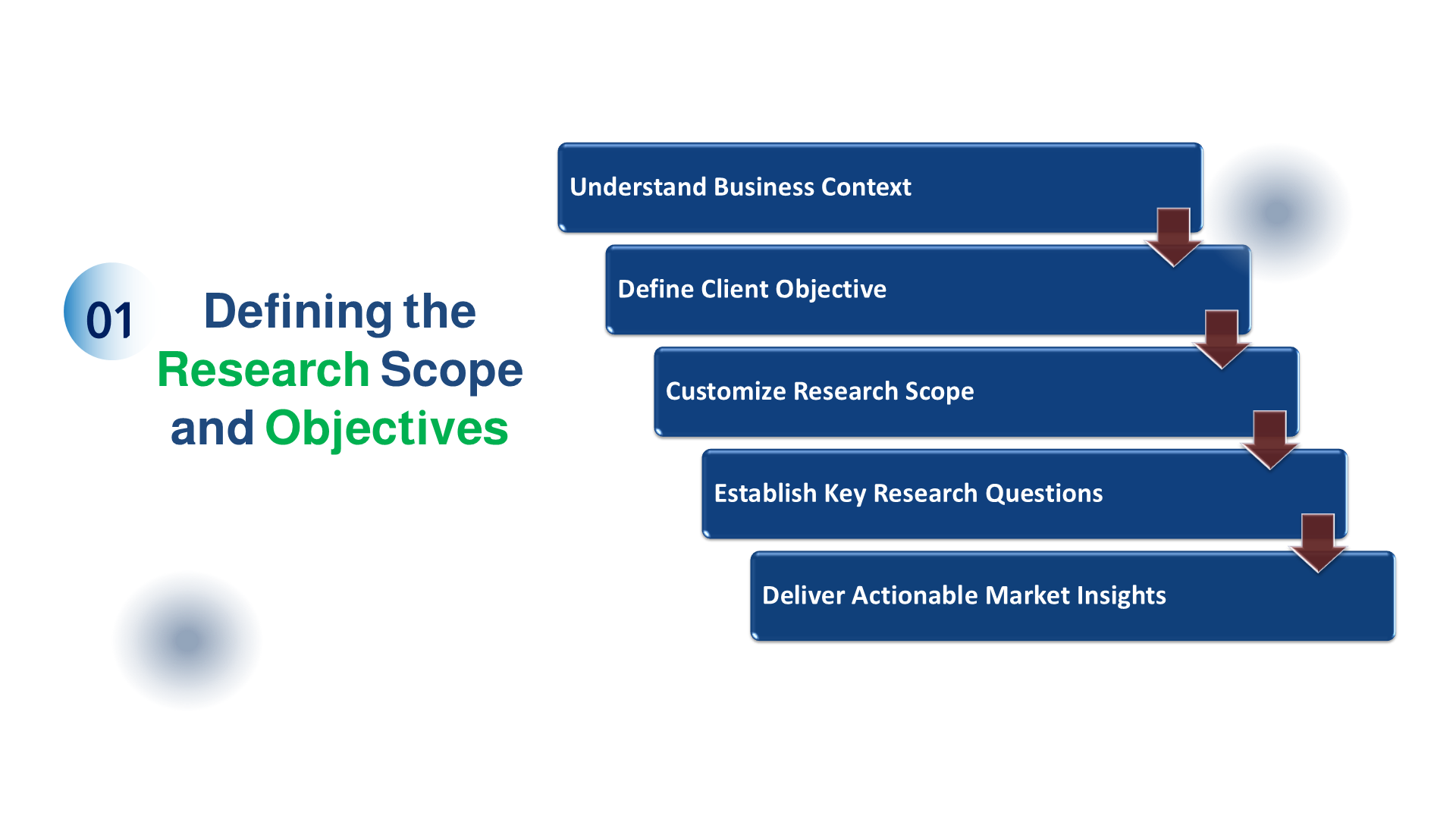
1.1. Market Segmentation & Scope
1.2. Market Definition
1.3. Information Procurement
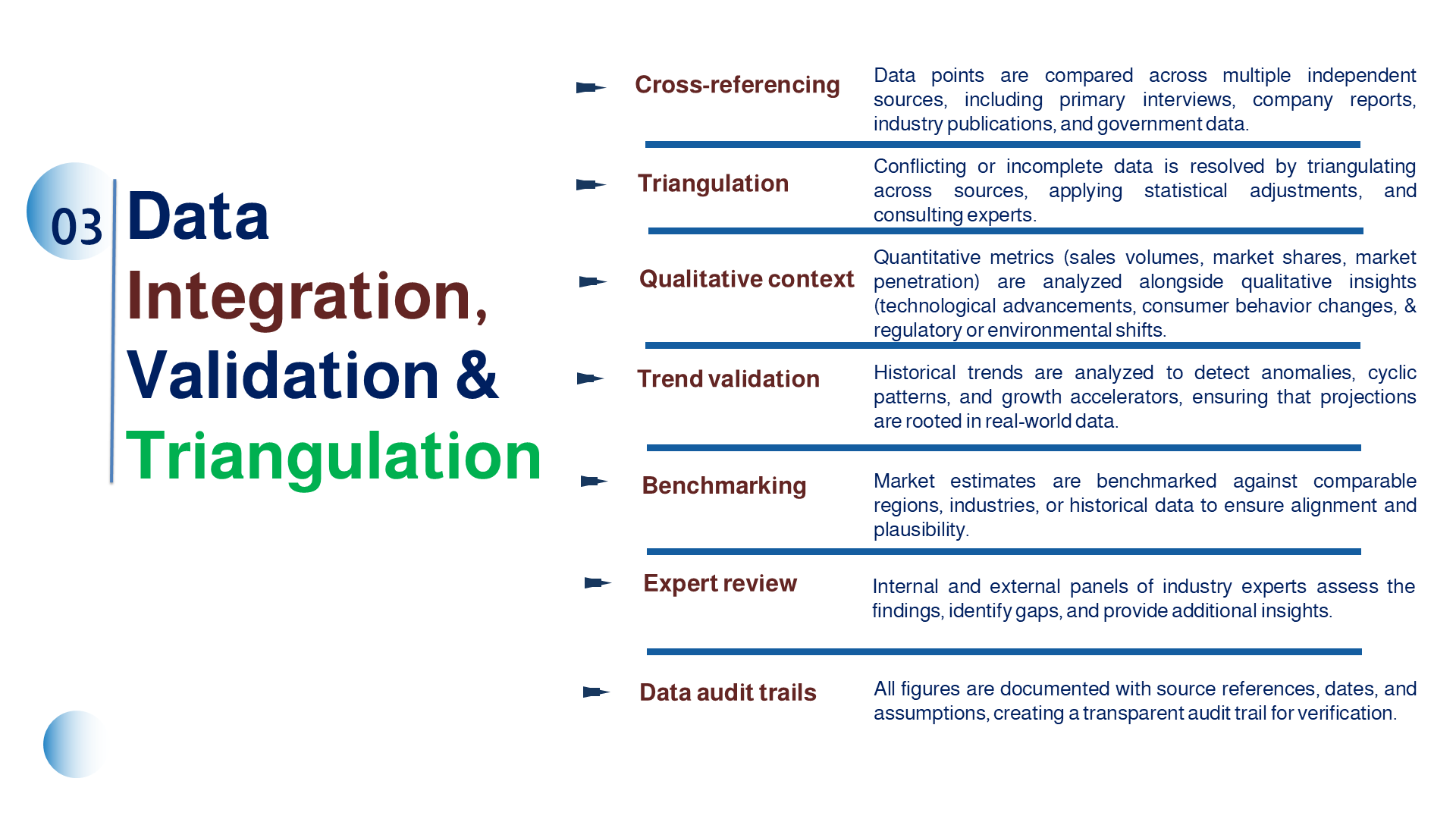
1.3.1 Information Analysis
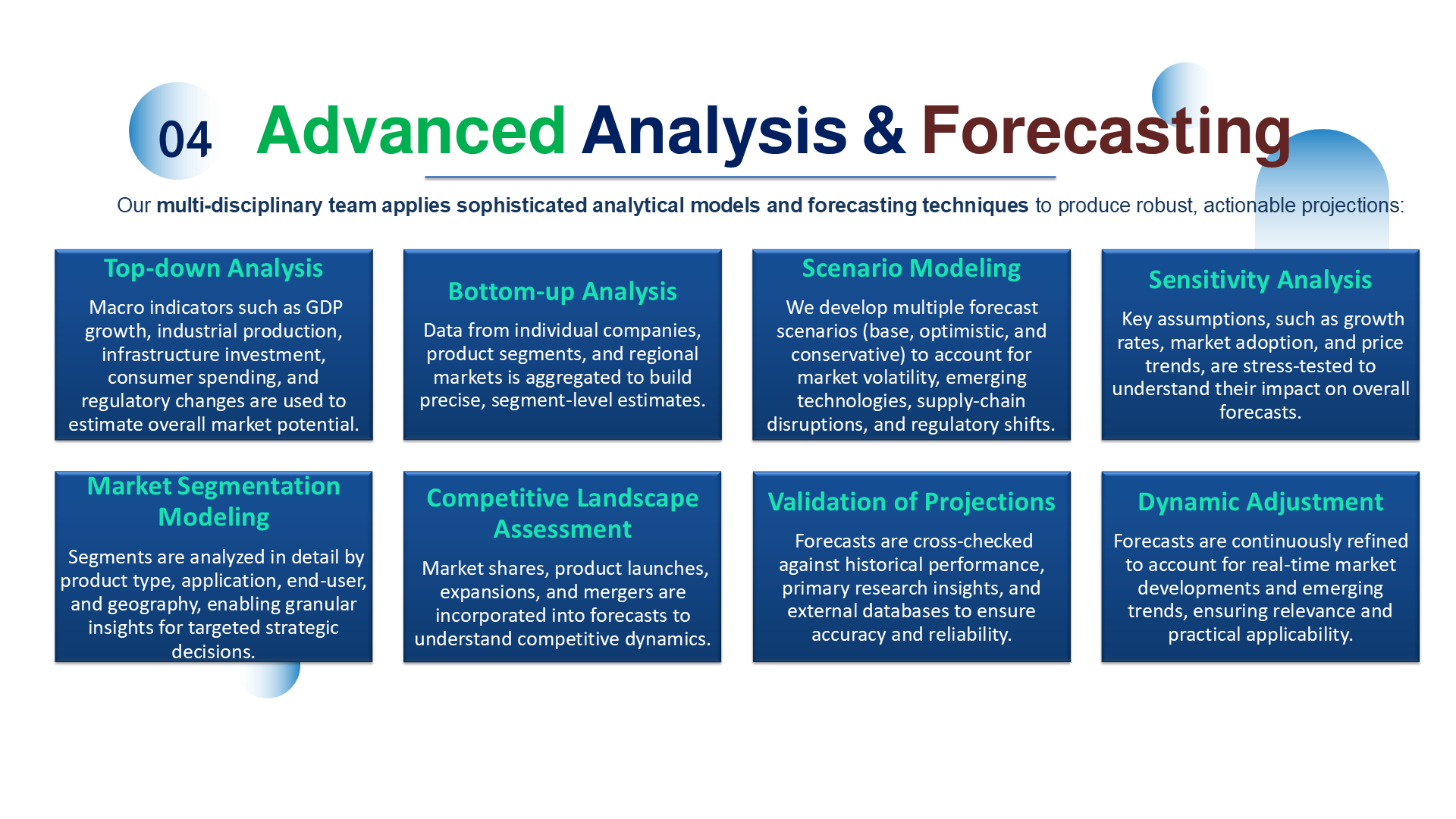
1.3.2 Market Formulation & Data Visualization
1.3.3 Data Validation & Publishing
1.4. Research Scope and Assumptions
1.4.1 List of Data Sources
Chapter 2. EXECUTIVE SUMMARY
2.1. Market Snapshot
2.2. Segmental Outlook
2.3. Competitive Outlook
Chapter 3. MARKET VARIABLES, TRENDS, FRAMEWORK
3.1. Market Lineage Outlook
3.2. Penetration & Growth Prospect Mapping
3.3. Value Chain Analysis
3.4. Regulatory Framework
3.4.1 Standards & Compliance
3.4.2 Regulatory Impact Analysis
3.5. Market Dynamics
3.5.1 Market Drivers
3.5.2 Market Restraints
3.5.3 Market Opportunities
3.5.4 Market Challenges
3.6. Porter's Five Forces Analysis
3.7. PESTLE Analysis
Chapter 4. GLOBAL SINGLE USE BIOREACTORS MARKET: BY PRODUCT SCOPE 2022-2034 (USD MN)
4.1. Market Analysis, Insights and Forecast Product Scope
4.2. Single-Use Bioreactor Systems Estimates and Forecasts By Regions 2022-2034 (USD MN)
4.3. Single-Use Media Bags Estimates and Forecasts By Regions 2022-2034 (USD MN)
4.4. Single-Use Filtration Assemblies Estimates and Forecasts By Regions 2022-2034 (USD MN)
4.5. Other Products Estimates and Forecasts By Regions 2022-2034 (USD MN)
Chapter 5. GLOBAL SINGLE USE BIOREACTORS MARKET: BY TYPE 2022-2034 (USD MN)
5.1. Market Analysis, Insights and Forecast Type
5.2. Stirred-Tank SUBs Estimates and Forecasts By Regions 2022-2034 (USD MN)
5.3. Wave-Induced SUBs Estimates and Forecasts By Regions 2022-2034 (USD MN)
5.4. Bubble-Column SUBs Estimates and Forecasts By Regions 2022-2034 (USD MN)
5.5. Other SUBs Estimates and Forecasts By Regions 2022-2034 (USD MN)
Chapter 6. GLOBAL SINGLE USE BIOREACTORS MARKET: BY TYPE OF CELL 2022-2034 (USD MN)
6.1. Market Analysis, Insights and Forecast Type Of Cell
6.2. Mammalian Cells Estimates and Forecasts By Regions 2022-2034 (USD MN)
6.3. Bacterial Cells Estimates and Forecasts By Regions 2022-2034 (USD MN)
6.4. Yeast Cells Estimates and Forecasts By Regions 2022-2034 (USD MN)
6.5. Other Cells Estimates and Forecasts By Regions 2022-2034 (USD MN)
Chapter 7. GLOBAL SINGLE USE BIOREACTORS MARKET: BY MOLECULE TYPE 2022-2034 (USD MN)
7.1. Market Analysis, Insights and Forecast Molecule Type
7.2. Monoclonal Antibodies Estimates and Forecasts By Regions 2022-2034 (USD MN)
7.3. Vaccines Estimates and Forecasts By Regions 2022-2034 (USD MN)
7.4. Gene Modified Cells Estimates and Forecasts By Regions 2022-2034 (USD MN)
7.5. Stem Cells Estimates and Forecasts By Regions 2022-2034 (USD MN)
7.6. Other Molecules Estimates and Forecasts By Regions 2022-2034 (USD MN)
Chapter 8. GLOBAL SINGLE USE BIOREACTORS MARKET: BY APPLICATION 2022-2034 (USD MN)
8.1. Market Analysis, Insights and Forecast Application
8.2. Research and Development (R&D) or Process Development Estimates and Forecasts By Regions 2022-2034 (USD MN)
8.3. Bioproduction Estimates and Forecasts By Regions 2022-2034 (USD MN)
Chapter 9. GLOBAL SINGLE USE BIOREACTORS MARKET: BY END-USE 2022-2034 (USD MN)
9.1. Market Analysis, Insights and Forecast End-use
9.2. Pharmaceutical & Biopharmaceutical Companies Estimates and Forecasts By Regions 2022-2034 (USD MN)
9.3. CROs & CMOs Estimates and Forecasts By Regions 2022-2034 (USD MN)
9.4. Academic & Research Institutes Estimates and Forecasts By Regions 2022-2034 (USD MN)
Chapter 10. GLOBAL SINGLE USE BIOREACTORS MARKET: BY USAGE TYPE 2022-2034 (USD MN)
10.1. Market Analysis, Insights and Forecast Usage Type
10.2. Lab-scale Production Estimates and Forecasts By Regions 2022-2034 (USD MN)
10.3. Pilot-scale Production Estimates and Forecasts By Regions 2022-2034 (USD MN)
10.4. Large-scale Production Estimates and Forecasts By Regions 2022-2034 (USD MN)
Chapter 11. GLOBAL SINGLE USE BIOREACTORS MARKET: BY REGION 2022-2034 (USD MN)
11.1. Regional Outlook
11.2. North America Market Analysis, Insights and Forecast, 2022-2034 (USD MN)
11.2.1 By Product Scope
11.2.2 By Type
11.2.3 By Type Of Cell
11.2.4 By Molecule Type
11.2.5 By Application
11.2.6 By End-use
11.2.7 By Usage Type
11.2.8 United States
11.2.9 Canada
11.2.10 Mexico
11.3. Europe Market Analysis, Insights and Forecast, 2022-2034 (USD MN)
11.3.1 By Product Scope
11.3.2 By Type
11.3.3 By Type Of Cell
11.3.4 By Molecule Type
11.3.5 By Application
11.3.6 By End-use
11.3.7 By Usage Type
11.3.8 United Kingdom
11.3.9 France
11.3.10 Germany
11.3.11 Italy
11.3.12 Spain
11.3.13 Russia
11.3.14 Rest Of Europe
11.4. Asia-Pacific Market Analysis, Insights and Forecast, 2022-2034 (USD MN)
11.4.1 By Product Scope
11.4.2 By Type
11.4.3 By Type Of Cell
11.4.4 By Molecule Type
11.4.5 By Application
11.4.6 By End-use
11.4.7 By Usage Type
11.4.8 China
11.4.9 Japan
11.4.10 South Korea
11.4.11 India
11.4.12 Australia
11.4.13 South East Asia
11.4.14 Rest Of Asia Pacific
11.5. Latin America Market Analysis, Insights and Forecast, 2022-2034 (USD MN)
11.5.1 By Product Scope
11.5.2 By Type
11.5.3 By Type Of Cell
11.5.4 By Molecule Type
11.5.5 By Application
11.5.6 By End-use
11.5.7 By Usage Type
11.5.8 Brazil
11.5.9 Argentina
11.5.10 Peru
11.5.11 Chile
11.5.12 Rest of Latin America
11.6. Middle East & Africa Market Analysis, Insights and Forecast, 2022-2034 (USD MN)
11.6.1 By Product Scope
11.6.2 By Type
11.6.3 By Type Of Cell
11.6.4 By Molecule Type
11.6.5 By Application
11.6.6 By End-use
11.6.7 By Usage Type
11.6.8 Saudi Arabia
11.6.9 UAE
11.6.10 Israel
11.6.11 South Africa
11.6.12 Rest of the Middle East And Africa
Chapter 12. COMPETITIVE LANDSCAPE
12.1. Recent Developments
12.2. Company Categorization
12.3. Supply Chain & Channel Partners (based on availability)
12.4. Market Share & Positioning Analysis (based on availability)
12.5. Vendor Landscape (based on availability)
12.6. Strategy Mapping
Chapter 13. COMPANY PROFILES OF GLOBAL SINGLE USE BIOREACTORS INDUSTRY
13.1. Top Companies Market Share Analysis
13.2. Company Profiles (Overview, Services, Financials (based on availability), Recent Developments,
Strategies, SWOT, Etc.)
13.2.1 Sartorius Stedim Biotech
13.2.2 Thermo Fisher Scientific
13.2.3 Danaher
13.2.4 Merck KGaA
13.2.5 Celltainer Biotech BV
13.2.6 Getinge AB
13.2.7 Eppendorf AG
13.2.8 Cellexus
13.2.9 PBS Biotech Inc
13.2.10 Distek Inc
13.2.11 ABEC
LIST OF TABLES
- Market Snapshot
- Segment Outlook
- Competitive Outlook
- Market Analysis By Product Scope-2022-2034 (USD MN)
- Single-Use Bioreactor Systems Market Size By Geography (USD MN)
- Single-Use Media Bags Market Size By Geography (USD MN)
- Single-Use Filtration Assemblies Market Size By Geography (USD MN)
- Other Products Market Size By Geography (USD MN)
- Market Analysis By Type-2022-2034 (USD MN)
- Stirred-Tank SUBs Market Size By Geography (USD MN)
- Wave-Induced SUBs Market Size By Geography (USD MN)
- Bubble-Column SUBs Market Size By Geography (USD MN)
- Other SUBs Market Size By Geography (USD MN)
- Market Analysis By Type Of Cell-2022-2034 (USD MN)
- Mammalian Cells Market Size By Geography (USD MN)
- Bacterial Cells Market Size By Geography (USD MN)
- Yeast Cells Market Size By Geography (USD MN)
- Other Cells Market Size By Geography (USD MN)
- Market Analysis By Molecule Type-2022-2034 (USD MN)
- Monoclonal Antibodies Market Size By Geography (USD MN)
- Vaccines Market Size By Geography (USD MN)
- Gene Modified Cells Market Size By Geography (USD MN)
- Stem Cells Market Size By Geography (USD MN)
- Other Molecules Market Size By Geography (USD MN)
- Market Analysis By Application-2022-2034 (USD MN)
- Research and Development (R&D) or Process Development Market Size By Geography (USD MN)
- Bioproduction Market Size By Geography (USD MN)
- Market Analysis By End-use-2022-2034 (USD MN)
- Pharmaceutical & Biopharmaceutical Companies Market Size By Geography (USD MN)
- CROs & CMOs Market Size By Geography (USD MN)
- Academic & Research Institutes Market Size By Geography (USD MN)
- Market Analysis By Usage Type-2022-2034 (USD MN)
- Lab-scale Production Market Size By Geography (USD MN)
- Pilot-scale Production Market Size By Geography (USD MN)
- Large-scale Production Market Size By Geography (USD MN)
- Global Single Use Bioreactors Market Sales By Geography-2022-2034 (USD MN)
- North America Market Analysis (USD MN)
- United States Market Analysis (USD MN)
- Canada Market Analysis (USD MN)
- Mexico Market Analysis (USD MN)
- Europe Market Analysis (USD MN)
- United Kingdom Market Analysis (USD MN)
- France Market Analysis (USD MN)
- Germany Market Analysis (USD MN)
- Italy Market Analysis (USD MN)
- Russia Market Analysis (USD MN)
- Spain Market Analysis (USD MN)
- Rest of Europe Market Analysis (USD MN)
- Asia Pacific Market Analysis (USD MN)
- China Market Analysis (USD MN)
- Japan Market Analysis (USD MN)
- India Market Analysis (USD MN)
- South Korea Market Analysis (USD MN)
- Australia Market Analysis (USD MN)
- South East Asia Market Analysis (USD MN)
- Rest of Asia Pacific Market Analysis (USD MN)
- Latin America Market Analysis (USD MN)
- Brazil Market Analysis (USD MN)
- Argentina Market Analysis (USD MN)
- Peru Market Analysis (USD MN)
- Chile Market Analysis (USD MN)
- Rest of Latin America Market Analysis (USD MN)
- Middle East & Africa Market Analysis (USD MN)
- Saudi Arabia Market Analysis (USD MN)
- UAE Market Analysis (USD MN)
- Israel Market Analysis (USD MN)
- South Africa Market Analysis (USD MN)
- Rest of Middle East and Africa Market Analysis (USD MN)
- Partnership/Collaboration/Agreement
- Mergers And Acquisition
LIST OF FIGURES
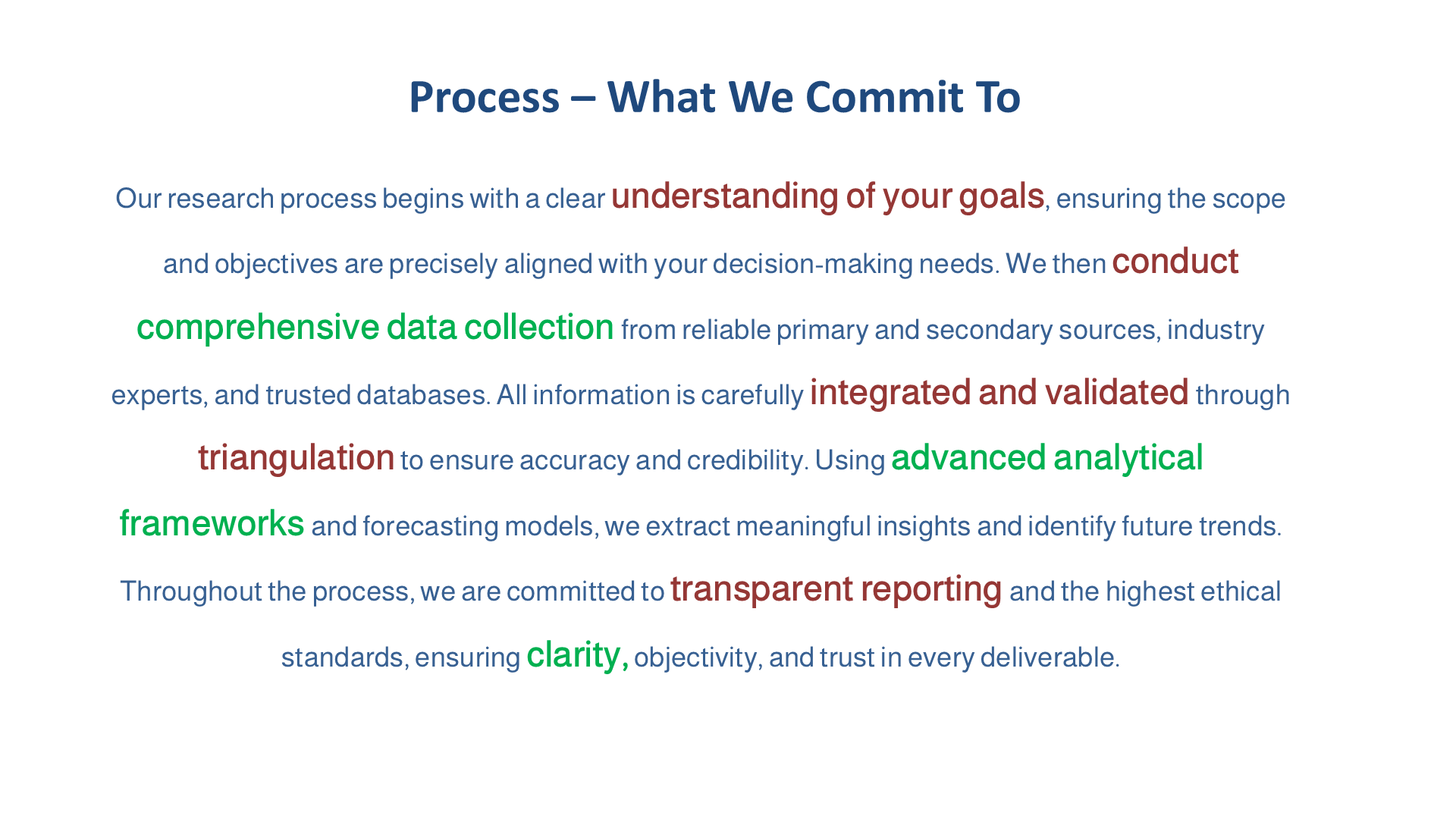
- Research Scope of Global Single Use Bioreactors Report
- Market Research Process
- Market Research Methodology
- Global Single Use Bioreactors Market Size, By Regions (USD MN)
- Porters Five Forces Analysis
- PESTLE Analysis
- Market Attractiveness Analysis
- Value Chain Analysis
- Global Market Analysis By Product Scope-2022-2034(USD MN)
- Single-Use Bioreactor Systems Market Sales By Geography (USD MN)
- Single-Use Media Bags Market Sales By Geography (USD MN)
- Single-Use Filtration Assemblies Market Sales By Geography (USD MN)
- Other Products Market Sales By Geography (USD MN)
- Global Market Analysis By Type-2022-2034(USD MN)
- Stirred-Tank SUBs Market Sales By Geography (USD MN)
- Wave-Induced SUBs Market Sales By Geography (USD MN)
- Bubble-Column SUBs Market Sales By Geography (USD MN)
- Other SUBs Market Sales By Geography (USD MN)
- Global Market Analysis By Type Of Cell-2022-2034(USD MN)
- Mammalian Cells Market Sales By Geography (USD MN)
- Bacterial Cells Market Sales By Geography (USD MN)
- Yeast Cells Market Sales By Geography (USD MN)
- Other Cells Market Sales By Geography (USD MN)
- Global Market Analysis By Molecule Type-2022-2034(USD MN)
- Monoclonal Antibodies Market Sales By Geography (USD MN)
- Vaccines Market Sales By Geography (USD MN)
- Gene Modified Cells Market Sales By Geography (USD MN)
- Stem Cells Market Sales By Geography (USD MN)
- Other Molecules Market Sales By Geography (USD MN)
- Global Market Analysis By Application-2022-2034(USD MN)
- Research and Development (R&D) or Process Development Market Sales By Geography (USD MN)
- Bioproduction Market Sales By Geography (USD MN)
- Global Market Analysis By End-use-2022-2034(USD MN)
- Pharmaceutical & Biopharmaceutical Companies Market Sales By Geography (USD MN)
- CROs & CMOs Market Sales By Geography (USD MN)
- Academic & Research Institutes Market Sales By Geography (USD MN)
- Global Market Analysis By Usage Type-2022-2034(USD MN)
- Lab-scale Production Market Sales By Geography (USD MN)
- Pilot-scale Production Market Sales By Geography (USD MN)
- Large-scale Production Market Sales By Geography (USD MN)
- Global Market Sales-2022-2034 (USD MN)
- North America Market Sales-2022-2034 (USD MN)
- Europe Market Sales-2022-2034 (USD MN)
- Asia Pacific Market Sales-2022-2034 (USD MN)
- Latin America Market Sales-2022-2034 (USD MN)
- Middle East & Africa Market Sales-2022-2034 (USD MN)
- Recent Development in Industry
- Top Company Market Share Analysis



Frequently Asked Questions (FAQs) about this Report
How big is the Global Single Use Bioreactors market?
What is the Global Single Use Bioreactors market growth?
Which country holds the highest share in the Global Single Use Bioreactors market?
How is the Global Single Use Bioreactors market segmented in the report?
Who are the key players in the Global Single Use Bioreactors market?