
Global Organic Nanofiltration Membrane Market Size, Share, Trends & Growth Analysis Report Segmented By Product Type (Polymeric Membranes, Ceramic Membranes, Composite Membranes), Application, End-User Industry And Regions (North America, Europe, Asia-Pacific, Latin America, Middle East and Africa), 2026-2034
The Organic Nanofiltration Membrane Market size was valued at USD 1.97 Billion in 2025. It is projected to grow from USD 2.16 Billion in 2026 to USD 4.59 Billion by 2034, at a CAGR of 9.87% during the forecast period.
The Organic Nanofiltration Membrane market is poised for significant expansion, propelled by the increasing global imperative for advanced separation and purification technologies across diverse industrial and municipal applications. Key drivers include the escalating demand for potable water amidst growing scarcity, the stringent regulatory landscape governing wastewater discharge, and the need for efficient product recovery in various manufacturing processes. Opportunities are emerging from technological advancements that enhance membrane performance and durability, alongside a broadening scope of applications in sectors such as pharmaceuticals and specialized chemical processing. The continuous focus on sustainability and resource efficiency further stimulates market growth, as industries seek environmentally sound solutions for filtration and concentration. This confluence of factors creates a robust trajectory for the market's anticipated growth.
Market Dynamics
Organic Nanofiltration Membrane Market Drivers
- Increasing Global Water Scarcity and Contamination: The escalating global water scarcity, exacerbated by climate change and population growth, is a primary driver for the Organic Nanofiltration Membrane market. As freshwater resources dwindle, the need for advanced purification technologies to treat contaminated sources and enable water reuse becomes paramount. For instance, the United Nations reports that billions of people worldwide still lack safely managed drinking water, underscoring the critical demand for effective filtration solutions. Nanofiltration membranes play a vital role in removing micropollutants, dissolved organic matter, and multivalent ions, providing a cost-effective and energy-efficient method for producing high-quality water for various applications, directly addressing this pressing global challenge.
- Stringent Environmental Regulations on Wastewater Discharge: The imposition of increasingly stringent environmental regulations on industrial and municipal wastewater discharge is a significant market driver. Governments worldwide are enacting stricter limits on pollutants, compelling industries to adopt advanced treatment technologies like organic nanofiltration to comply with legal requirements and minimize environmental impact. For instance, the U.S. Environmental Protection Agency continuously updates discharge standards for various industries, necessitating robust filtration methods to remove complex contaminants. This regulatory pressure forces industries to invest in sophisticated membrane technologies to ensure their effluents meet or exceed environmental quality standards before release, driving the adoption of nanofiltration.
- Growing Demand for Product Recovery and Resource Efficiency: The imperative for industries to enhance resource efficiency and recover valuable products from waste streams is significantly driving the nanofiltration membrane market. In sectors such as food and beverage, pharmaceuticals, and chemical processing, nanofiltration enables the selective separation and concentration of desired compounds, reducing material losses and improving economic viability. The European Union's push towards a circular economy model, emphasizing resource recovery, exemplifies this trend. By minimizing waste and maximizing the utility of raw materials, organic nanofiltration contributes directly to sustainable industrial practices and improved profitability, making it an indispensable tool for modern manufacturing.
- Expansion of Industrial Processes Requiring Selective Separation: The continuous evolution and expansion of various industrial processes that necessitate highly selective separation techniques are fueling the demand for organic nanofiltration membranes. Industries like dairy processing require nanofiltration for lactose removal and protein concentration, while the textile sector uses it for dye recovery and wastewater treatment. The U.S. Department of Commerce regularly tracks growth in manufacturing sectors, many of which increasingly integrate advanced separation technologies. This diversified and growing industrial application base, driven by the need for precise filtration, lower energy consumption compared to traditional methods, and improved product quality, ensures sustained growth for nanofiltration membranes.
Organic Nanofiltration Membrane Market Opportunities
- Increasing Adoption in Pharmaceutical and Biotechnology Sectors: The burgeoning pharmaceutical and biotechnology sectors present a substantial opportunity for organic nanofiltration membranes. These industries require highly precise separation processes for active pharmaceutical ingredient (API) purification, solvent recovery, and sterile filtration. The Food and Drug Administration (FDA) emphasizes stringent purity standards for drug manufacturing, which nanofiltration efficiently addresses. As drug discovery accelerates and biopharmaceutical production scales up, the demand for membranes capable of delicate, selective separations without thermal degradation or chemical contamination will continue to rise, offering a high-value application area for advanced organic nanofiltration technologies.
- Growth in Food and Beverage Processing for Concentration and Purification: The expanding food and beverage processing industry offers significant opportunities for organic nanofiltration membranes, particularly for concentration, demineralization, and purification applications. This includes dairy product concentration, fruit juice clarification, and sugar refining, where nanofiltration provides a non-thermal, energy-efficient alternative to traditional methods. The U.S. Department of Agriculture reports consistent growth in food processing output, indicating a stable market for such technologies. As consumer demand for natural, high-quality, and minimally processed foods increases, along with a focus on cost-effective production, nanofiltration becomes an attractive solution for enhancing product quality and process efficiency.
- Emergence of Novel Materials and Advanced Membrane Architectures: The continuous development of novel membrane materials and advanced architectural designs offers significant market opportunities. Researchers are exploring new polymers and composite structures that enhance membrane permeability, selectivity, and fouling resistance, addressing previous limitations. For instance, national research agencies globally fund projects aimed at developing next-generation filtration materials, highlighting the potential for innovation. These advancements lead to more efficient and durable membranes capable of handling complex industrial streams and operating under challenging conditions, opening new application areas and improving the overall economic viability of nanofiltration processes across various industries.
- Application Expansion in Chemical and Petrochemical Industries: The chemical and petrochemical industries represent a growing opportunity for organic nanofiltration membranes, particularly for solvent recovery, catalyst recycling, and product purification. The need to reduce solvent waste, decrease energy consumption in separation processes, and achieve higher product purity drives the adoption of nanofiltration. The Ministry of Chemicals and Fertilizers, Government of India, consistently reports on the growth of the chemical sector, indicating a fertile ground for advanced separation technologies. As these industries seek more sustainable and cost-effective alternatives to traditional distillation and evaporation, nanofiltration offers an attractive solution, enhancing process efficiency and environmental performance.
Organic Nanofiltration Membrane Market Restrain & Challenges
- High Capital Investment for System Implementation: A significant restraint in the Organic Nanofiltration Membrane market is the substantial upfront capital investment required for installing complete filtration systems. While membranes themselves are a component, the entire setup includes pumps, pre-treatment units, and control systems, which can be costly. This high initial expenditure can deter smaller enterprises or those with limited budgets from adopting nanofiltration technology. The U.S. Energy Information Administration frequently highlights energy costs associated with industrial processes, where initial equipment outlay is a major factor influencing technology adoption across sectors.
- Membrane Fouling and Cleaning Requirements: Membrane fouling remains a persistent challenge in organic nanofiltration, limiting long-term performance and increasing operational costs. Fouling occurs when organic and inorganic substances deposit on the membrane surface, reducing flux and separation efficiency. Frequent chemical cleaning is often necessary, which adds to operational expenses, consumes chemicals, and shortens membrane lifespan. While research continuously seeks solutions, effective fouling mitigation remains a complex issue that impacts system uptime and maintenance budgets across industries employing nanofiltration technology for various purification needs.
- Limited Chemical and Thermal Stability of Organic Membranes: The inherent limitations in the chemical and thermal stability of organic nanofiltration membranes present a notable challenge. Organic polymers, while flexible and cost-effective, can degrade when exposed to harsh chemicals, extreme pH levels, or high temperatures, which are common in many industrial processes. This restricts their applicability in certain aggressive environments, necessitating costly pre-treatment or alternative, more expensive ceramic membrane. The National Institute of Standards and Technology provides guidelines on material properties, underscoring that material limitations can impact broad industrial adoption and performance durability.
- Concentrate Disposal Challenges: The management and disposal of the concentrated reject stream from nanofiltration processes pose a significant environmental and economic challenge. While nanofiltration excels at purifying the permeate, the concentrated waste containing pollutants can be difficult and expensive to treat or dispose of, especially for highly contaminated industrial effluents. Environmental protection agencies, such as the European Environment Agency, consistently report on challenges related to industrial waste management. This necessitates additional treatment steps or specialized disposal methods, adding to the overall operational cost and complexity for industries utilizing nanofiltration technology.
Current Trends in the Organic Nanofiltration Membrane Market
- Advancements in Hybrid and Composite Membrane Technologies: A prominent trend in the Organic Nanofiltration Membrane market is the continuous advancement in hybrid and composite membrane technologies. Researchers are developing multi-layered structures, often combining organic polymers with inorganic materials or nanoparticles, to enhance membrane performance. This approach aims to improve permeability, selectivity, and robustness, while mitigating fouling. For instance, national science foundations actively fund studies on novel composite materials, reflecting the significant research interest. These innovations lead to membranes with superior operational stability and efficiency, broadening their application scope across diverse industrial and environmental challenges.
- Increased Focus on Energy Efficiency and Sustainable Operations: A significant trend is the growing emphasis on energy efficiency and sustainable operations within the nanofiltration membrane sector. Manufacturers are developing membranes that operate at lower pressures, thereby reducing energy consumption during filtration processes. This aligns with global efforts to minimize industrial energy footprints and operational costs. The U.S. Department of Energy consistently promotes energy-efficient technologies across industries, underscoring this vital trend. The focus extends to the entire lifecycle, including more sustainable manufacturing processes for the membranes themselves, contributing to overall environmental stewardship and resource conservation.
- Development of Anti-Fouling and Self-Cleaning Membranes: The challenge of membrane fouling is driving a strong trend towards the development of anti-fouling and self-cleaning organic nanofiltration membranes. Researchers are incorporating materials and surface modifications that resist the adhesion of foulants, or designing membranes that can be easily cleaned with minimal chemical intervention. This trend aims to reduce operational downtime, extend membrane lifespan, and lower maintenance costs. Innovations in surface chemistry, often supported by grants from government research agencies, are pivotal in creating more resilient and sustainable filtration solutions for various industrial applications, improving the economic viability of nanofiltration.
- Integration of Digitalization and Artificial Intelligence in Membrane Systems: The Organic Nanofiltration Membrane market is witnessing a trend towards the integration of digitalization and artificial intelligence (AI) in membrane system design, operation, and optimization. AI algorithms are being used for predictive maintenance, real-time performance monitoring, and optimizing cleaning cycles, enhancing overall system efficiency and reliability. The adoption of smart sensor and data analytics allows for more precise control over filtration parameters, minimizing energy use and extending membrane life. This technological convergence enables more intelligent and autonomous membrane filtration plants, as highlighted on smart manufacturing in chemical processing.
Segmentation Insights
Organic Nanofiltration Membrane market Analysis, By Product Type
By Product Type, the market is categorized into Polymeric Membranes, Ceramic Membranes, Composite Membranes.
- The largest segment in the Organic Nanofiltration Membrane market by Product Type is Polymeric Membranes. Their leading position is primarily due to their cost-effectiveness, ease of manufacturing, and versatility in terms of pore size and chemical modification. Polymeric membranes can be tailored for a wide range of applications and are significantly less expensive to produce than other membrane types, making them a more accessible solution for various industries. Their established manufacturing processes and extensive research into polymer chemistry have led to a broad product offering, cementing their dominant market share across numerous filtration and separation needs.
- The segment anticipated to grow at the fastest rate is Composite Membranes. This accelerated growth is driven by their ability to combine the advantages of different materials, often featuring a thin selective layer on a more robust support structure. This design allows for enhanced performance characteristics, such as higher flux, improved selectivity, and greater chemical stability, while often maintaining a competitive cost profile compared to homogeneous membranes. Innovations in material science and layering techniques are continuously improving their performance, addressing limitations of traditional membranes and opening new, more demanding applications, thereby fueling their rapid adoption across various filtration processes.
Organic Nanofiltration Membrane market Analysis, By Application
By Application, the market is categorized into Water Treatment, Food and Beverage, Pharmaceuticals, Textile, Chemical Processing.
- The largest segment in the Organic Nanofiltration Membrane market by Application is Water Treatment. This dominance is driven by the universal and escalating need for clean water for both municipal and industrial purposes. Nanofiltration effectively removes hardness, dissolved organic matter, micropollutants, and certain salts, making it crucial for drinking water purification, wastewater reuse, and industrial process water treatment. Global water scarcity and increasingly stringent water quality regulations necessitate advanced filtration solutions on a massive scale, establishing water treatment as the most significant and expansive application for organic nanofiltration membranes worldwide.
- The segment growing at the fastest rate is Pharmaceuticals. This rapid growth is fueled by the stringent purity requirements and complex separation needs within drug manufacturing and biotechnology. Nanofiltration membranes are increasingly vital for active pharmaceutical ingredient (API) purification, sterile filtration, and solvent recovery, processes demanding high selectivity and minimal thermal impact. The continuous growth in drug discovery, development of biopharmaceuticals, and the need for efficient, cost-effective purification methods in a highly regulated industry drive the rapid adoption and expansion of nanofiltration technologies within this high-value application sector.
Organic Nanofiltration Membrane market Analysis, By End-User Industry
By End-User Industry, the market is categorized into Municipal, Industrial, Commercial, Residential, Agricultural.
- The largest segment in the Organic Nanofiltration Membrane market by End-User Industry is Industrial. This sector encompasses a vast array of manufacturing and processing activities, including chemical, food and beverage, textile, and pharmaceutical industries, all of which require advanced separation and purification solutions. Industrial applications often involve complex feed streams, demanding the high selectivity and efficiency offered by nanofiltration for wastewater treatment, product recovery, and process optimization. The sheer volume and diversity of industrial operations globally contribute to its leading position, as companies seek to improve efficiency, comply with regulations, and recover valuable resources.
- The segment exhibiting the fastest growth is Agricultural. This rapid expansion is driven by the increasing need for efficient water management in agriculture, particularly for irrigation and nutrient recovery from agricultural runoff. As water resources become scarcer and environmental regulations on agricultural discharge tighten, nanofiltration offers a viable solution for treating and reusing water for crop irrigation, and potentially for concentrating valuable nutrients. The global push for sustainable agricultural practices and improved resource efficiency is accelerating the adoption of advanced filtration technologies in this sector, making it a rapidly emerging and high-growth end-user for organic nanofiltration membranes.
Organic Nanofiltration Membrane Market Regional Insights
The market has been geographically analysed across five regions, Europe, North America, Asia Pacific, Latin America, and the Middle East & Africa.
- The largest and fastest growing region in the Organic Nanofiltration Membrane market is Asia-Pacific. This dominance is attributed to the rapid industrialization, burgeoning population, and significant investments in infrastructure development across countries like China, India, and Southeast Asian nations. The region faces immense challenges related to water scarcity and industrial wastewater pollution, driving the widespread adoption of advanced filtration technologies. Furthermore, the robust growth of end-user industries such as textiles, chemicals, and food processing in Asia-Pacific necessitates sophisticated separation solutions, cementing its position as the largest market for organic nanofiltration membranes. Coupled with an increasing awareness of environmental sustainability and the adoption of advanced manufacturing practices, the region's dynamic economic growth and continuous need for innovative separation technologies underpin its position as the fastest-growing market for organic nanofiltration membranes.
Organic Nanofiltration Membrane Market Competitive Overview
The Organic Nanofiltration Membrane market features a competitive landscape comprising established global players and specialized regional manufacturers. Competition is driven by continuous innovation in membrane materials, module configurations, and system integration capabilities. Companies focus on enhancing membrane performance, such as improved flux, higher selectivity, and greater resistance to fouling, while also optimizing energy consumption. Strategic initiatives include extensive research and development, capacity expansions, and forming partnerships to leverage specialized expertise or enter new geographical markets. Differentiation often comes from providing tailored solutions for specific applications, strong after-sales support, and adherence to evolving regulatory standards. The market also sees competitive pressure from alternative separation technologies, prompting continuous advancements in cost-effectiveness and operational efficiency of nanofiltration systems.
Leading Market Players in the Organic Nanofiltration Membrane Market
- Dow Chemical Company: Dow Chemical Company is a significant participant in the Organic Nanofiltration Membrane market, primarily through its advanced separation technologies portfolio. The company leverages its extensive expertise in polymer science to develop high-performance organic membranes tailored for various industrial applications. Dow's focus is on providing robust and efficient solutions for water purification, industrial process separation, and resource recovery, contributing to sustainability initiatives across multiple sectors. Their commitment to research and development allows them to introduce membranes with improved properties, such as enhanced durability and selectivity, addressing complex filtration challenges faced by clients globally. Dow’s established distribution networks and technical support ensure widespread availability and effective implementation of their membrane technologies.
- Toray Industries Inc.: Toray Industries Inc. is a globally recognized leader in advanced materials, including a strong presence in the Organic Nanofiltration Membrane market. The company specializes in developing innovative polymeric membranes with superior performance characteristics, often targeting highly demanding applications in water treatment, pharmaceuticals, and industrial processes. Toray's comprehensive research and development efforts are dedicated to pushing the boundaries of membrane technology, focusing on aspects like anti-fouling properties, chemical resistance, and energy efficiency. Their integrated approach, from polymer synthesis to membrane fabrication, allows for precise control over membrane structure and function, enabling them to offer highly reliable and effective separation solutions to a diverse international client base.
- SUEZ Water Technologies & Solutions: SUEZ Water Technologies & Solutions is a prominent global entity providing comprehensive water treatment solutions, including advanced organic nanofiltration membrane technologies. The company’s offerings span the entire water cycle, from source water treatment to industrial process water and wastewater management. SUEZ emphasizes developing high-efficiency membrane systems that address critical challenges such as water scarcity, contaminant removal, and resource recovery for various industries and municipalities. Their solutions integrate cutting-edge membrane products with engineering expertise and operational support, ensuring optimal performance and compliance with stringent environmental regulations. SUEZ's broad portfolio and global presence enable them to deliver tailored and sustainable nanofiltration solutions worldwide.
Top Strategies Followed by Players
- Strategic Product Portfolio Diversification: A prominent strategy among leading players in the Organic Nanofiltration Membrane market is the strategic diversification of their product portfolios. This involves developing a wide range of membrane types and configurations to serve diverse applications across multiple end-user industries. For instance, companies are expanding beyond general water treatment to offer specialized membranes for pharmaceutical purification, food and beverage concentration, or chemical solvent recovery, each requiring unique membrane properties. This strategy enables companies to capture a broader market share and reduce dependence on any single application. The global water treatment industry alone, a major application area, processes billions of cubic meters daily, according to the United Nations Environment Programme, highlighting the vast scope for specialized solutions.
- Intensified Research and Development for Enhanced Performance: Leading players are heavily investing in intensified research and development to achieve significant enhancements in membrane performance. This includes improving membrane permeability for higher flux, increasing selectivity for more precise separations, and developing greater resistance to fouling and chemical degradation. The goal is to create next-generation membranes that are more efficient, durable, and cost-effective. For instance, advancements in materials science, often supported by grants from national science agencies, are crucial for creating membranes that can operate under harsher conditions or require less energy. This continuous innovation allows companies to differentiate their offerings and maintain a competitive edge.
- Expansion through Geographical Outreach and Partnerships: A key strategy is geographical outreach and forming strategic partnerships to expand market presence and penetrate emerging economies. This involves establishing local manufacturing facilities, sales offices, and technical support centers in high-growth regions. Companies also forge collaborations with local distributors, engineering firms, or research institutions to leverage regional expertise and address specific market needs. For instance, the rapid urbanization and industrial growth in Asia-Pacific, with billions of cubic meters of industrial wastewater generated annually according to regional environmental reports, present substantial opportunities for companies capable of providing localized membrane solutions through strong partnerships, driving market penetration and accessibility.
List of Companies Profiled in the Report are:
- Dow Chemical Company
- Toray Industries Inc.
- Pall Corporation
- Membrana GmbH
- SUEZ Water Technologies & Solutions
- Hyflux Ltd.
- Koch Membrane Systems
- Pentair plc
- Asahi Kasei Corporation
- LANXESS AG
- Nitto Denko Corporation
List of Segments Covered
This section of the Organic Nanofiltration Membrane market report provides detailed data on the segments at country and regional level, thereby assisting the strategist in identifying the target demographics for the respective product or services with the upcoming opportunities.
By Product Type
- Polymeric Membranes
- Ceramic Membranes
- Composite Membranes
By Application
- Water Treatment
- Food and Beverage
- Pharmaceuticals
- Textile
- Chemical Processing
By End-User Industry
- Municipal
- Industrial
- Commercial
- Residential
- Agricultural
1.1. Market Segmentation & Scope
1.2. Market Definition
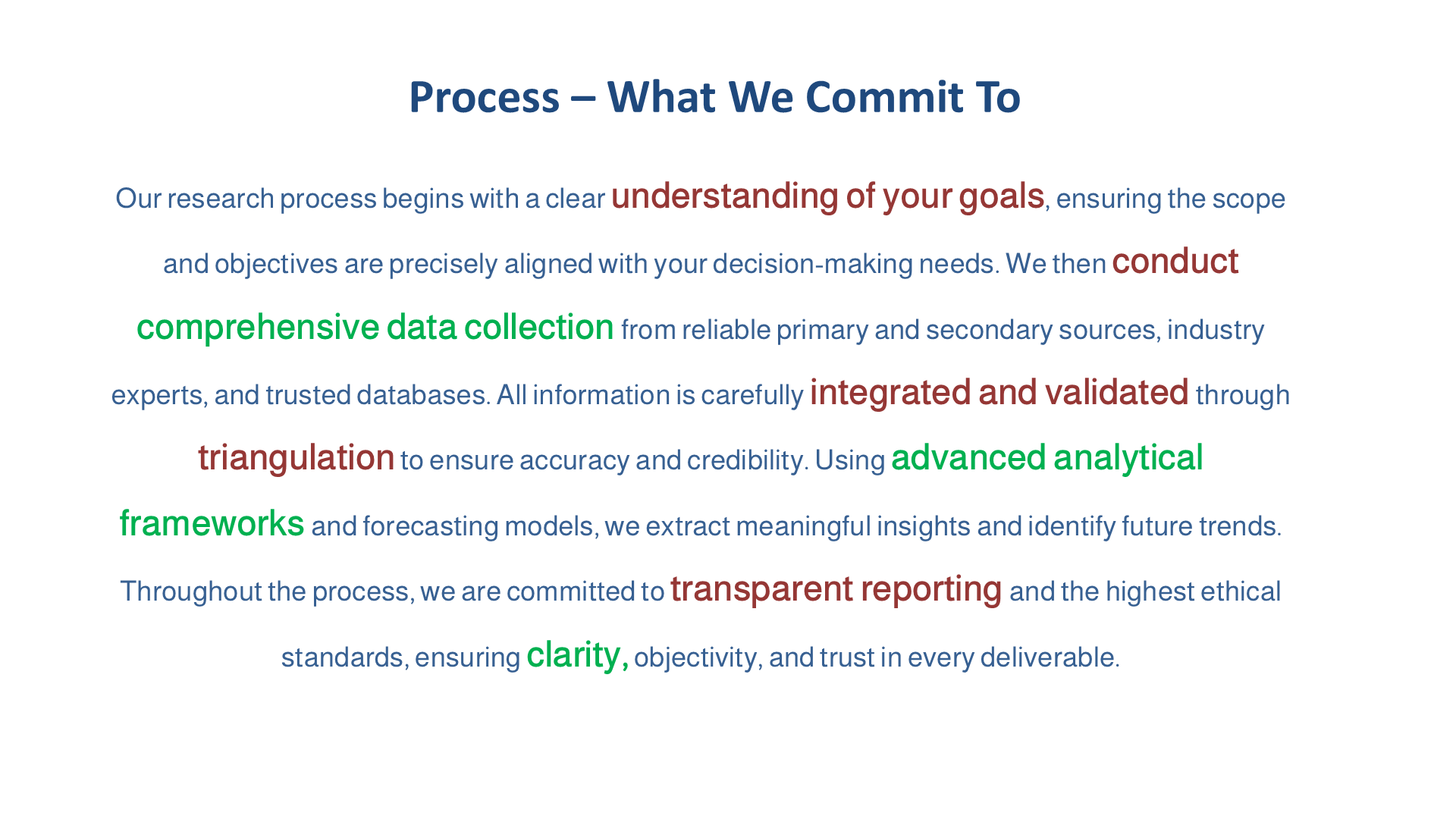
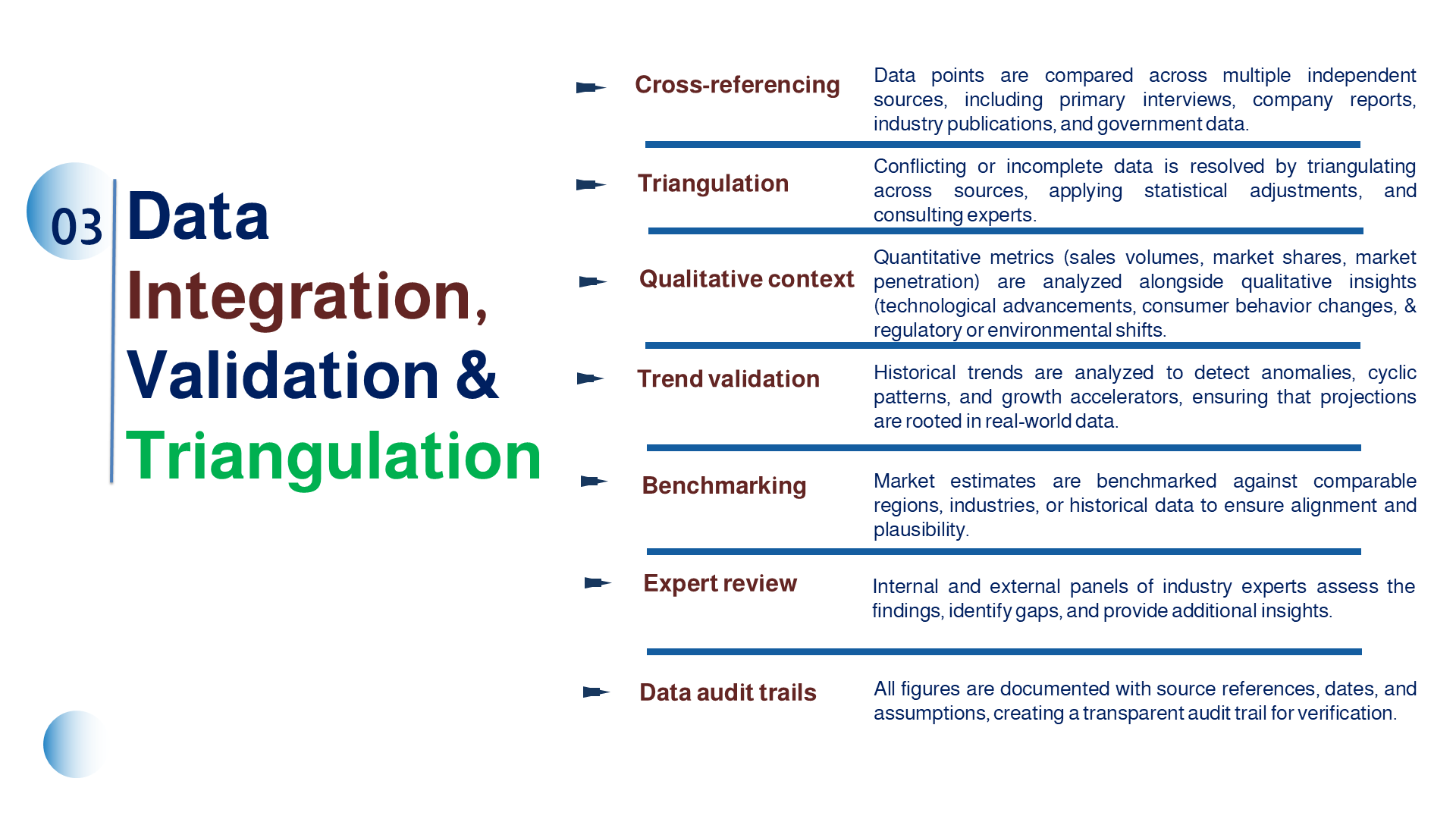
1.3. Information Procurement
1.3.1 Information Analysis
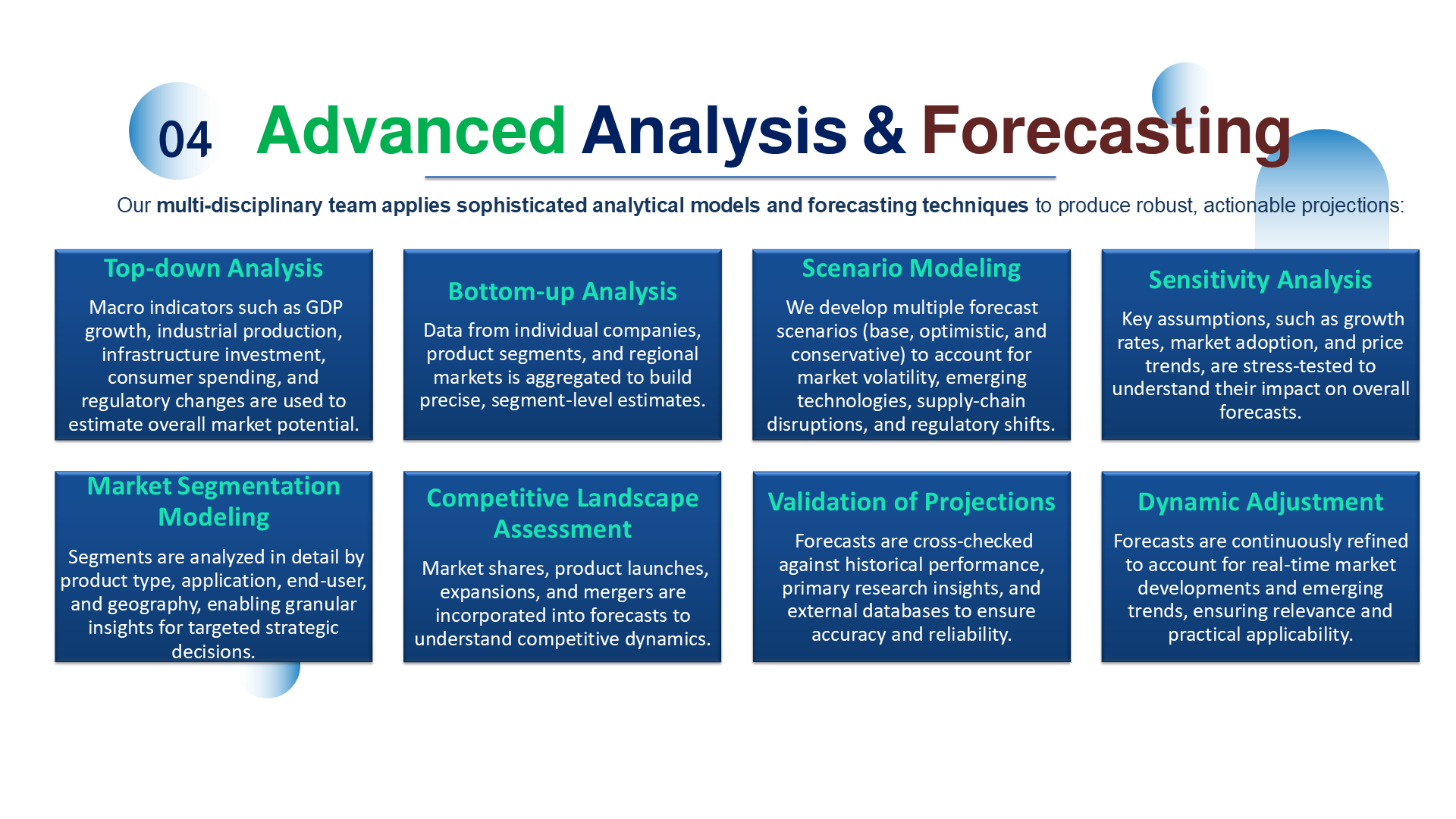
1.3.2 Market Formulation & Data Visualization
1.3.3 Data Validation & Publishing
1.4. Research Scope and Assumptions
1.4.1 List of Data Sources
Chapter 2. EXECUTIVE SUMMARY
2.1. Market Snapshot
2.2. Segmental Outlook
2.3. Competitive Outlook
Chapter 3. MARKET VARIABLES, TRENDS, FRAMEWORK
3.1. Market Lineage Outlook
3.2. Penetration & Growth Prospect Mapping
3.3. Value Chain Analysis
3.4. Regulatory Framework
3.4.1 Standards & Compliance
3.4.2 Regulatory Impact Analysis
3.5. Market Dynamics
3.5.1 Market Drivers
3.5.2 Market Restraints
3.5.3 Market Opportunities
3.5.4 Market Challenges
3.6. Porter's Five Forces Analysis
3.7. PESTLE Analysis
Chapter 4. GLOBAL ORGANIC NANOFILTRATION MEMBRANE MARKET: BY PRODUCT TYPE 2022-2034 (USD MN)
4.1. Market Analysis, Insights and Forecast Product Type
4.2. Polymeric Membranes Estimates and Forecasts By Regions 2022-2034 (USD MN)
4.3. Ceramic Membranes Estimates and Forecasts By Regions 2022-2034 (USD MN)
4.4. Composite Membranes Estimates and Forecasts By Regions 2022-2034 (USD MN)
Chapter 5. GLOBAL ORGANIC NANOFILTRATION MEMBRANE MARKET: BY APPLICATION 2022-2034 (USD MN)
5.1. Market Analysis, Insights and Forecast Application
5.2. Water Treatment Estimates and Forecasts By Regions 2022-2034 (USD MN)
5.3. Food and Beverage Estimates and Forecasts By Regions 2022-2034 (USD MN)
5.4. Pharmaceuticals Estimates and Forecasts By Regions 2022-2034 (USD MN)
5.5. Textile Estimates and Forecasts By Regions 2022-2034 (USD MN)
5.6. Chemical Processing Estimates and Forecasts By Regions 2022-2034 (USD MN)
Chapter 6. GLOBAL ORGANIC NANOFILTRATION MEMBRANE MARKET: BY END-USER INDUSTRY 2022-2034 (USD MN)
6.1. Market Analysis, Insights and Forecast End-user Industry
6.2. Municipal Estimates and Forecasts By Regions 2022-2034 (USD MN)
6.3. Industrial Estimates and Forecasts By Regions 2022-2034 (USD MN)
6.4. Commercial Estimates and Forecasts By Regions 2022-2034 (USD MN)
6.5. Residential Estimates and Forecasts By Regions 2022-2034 (USD MN)
6.6. Agricultural Estimates and Forecasts By Regions 2022-2034 (USD MN)
Chapter 7. GLOBAL ORGANIC NANOFILTRATION MEMBRANE MARKET: BY REGION 2022-2034 (USD MN)
7.1. Regional Outlook
7.2. North America Market Analysis, Insights and Forecast, 2022-2034 (USD MN)
7.2.1 By Product Type
7.2.2 By Application
7.2.3 By End-user Industry
7.2.4 United States
7.2.5 Canada
7.2.6 Mexico
7.3. Europe Market Analysis, Insights and Forecast, 2022-2034 (USD MN)
7.3.1 By Product Type
7.3.2 By Application
7.3.3 By End-user Industry
7.3.4 United Kingdom
7.3.5 France
7.3.6 Germany
7.3.7 Italy
7.3.8 Spain
7.3.9 Russia
7.3.10 Rest Of Europe
7.4. Asia-Pacific Market Analysis, Insights and Forecast, 2022-2034 (USD MN)
7.4.1 By Product Type
7.4.2 By Application
7.4.3 By End-user Industry
7.4.4 China
7.4.5 Japan
7.4.6 South Korea
7.4.7 India
7.4.8 Australia
7.4.9 South East Asia
7.4.10 Rest Of Asia Pacific
7.5. Latin America Market Analysis, Insights and Forecast, 2022-2034 (USD MN)
7.5.1 By Product Type
7.5.2 By Application
7.5.3 By End-user Industry
7.5.4 Brazil
7.5.5 Argentina
7.5.6 Peru
7.5.7 Chile
7.5.8 Rest of Latin America
7.6. Middle East & Africa Market Analysis, Insights and Forecast, 2022-2034 (USD MN)
7.6.1 By Product Type
7.6.2 By Application
7.6.3 By End-user Industry
7.6.4 Saudi Arabia
7.6.5 UAE
7.6.6 Israel
7.6.7 South Africa
7.6.8 Rest of the Middle East And Africa
Chapter 8. COMPETITIVE LANDSCAPE
8.1. Recent Developments
8.2. Company Categorization
8.3. Supply Chain & Channel Partners (based on availability)
8.4. Market Share & Positioning Analysis (based on availability)
8.5. Vendor Landscape (based on availability)
8.6. Strategy Mapping
Chapter 9. COMPANY PROFILES OF GLOBAL ORGANIC NANOFILTRATION MEMBRANE INDUSTRY
9.1. Top Companies Market Share Analysis
9.2. Company Profiles (Overview, Services, Financials (based on availability), Recent Developments,
Strategies, SWOT, Etc.)
9.2.1 Toray Industries Inc
9.2.2 Pall Corporation
9.2.3 Membrana GmbH
9.2.4 SUEZ Water Technologies & Solutions
9.2.5 Hyflux Ltd
9.2.6 Koch Membrane Systems
9.2.7 Pentair Plc
9.2.8 Asahi Kasei Corporation
9.2.9 LANXESS AG
9.2.10 Nitto Denko Corporation
LIST OF TABLES
- Market Snapshot
- Segment Outlook
- Competitive Outlook
- Market Analysis By Product Type-2022-2034 (USD MN)
- Polymeric Membranes Market Size By Geography (USD MN)
- Ceramic Membranes Market Size By Geography (USD MN)
- Composite Membranes Market Size By Geography (USD MN)
- Market Analysis By Application-2022-2034 (USD MN)
- Water Treatment Market Size By Geography (USD MN)
- Food and Beverage Market Size By Geography (USD MN)
- Pharmaceuticals Market Size By Geography (USD MN)
- Textile Market Size By Geography (USD MN)
- Chemical Processing Market Size By Geography (USD MN)
- Market Analysis By End-user Industry-2022-2034 (USD MN)
- Municipal Market Size By Geography (USD MN)
- Industrial Market Size By Geography (USD MN)
- Commercial Market Size By Geography (USD MN)
- Residential Market Size By Geography (USD MN)
- Agricultural Market Size By Geography (USD MN)
- Global Organic Nanofiltration Membrane Market Sales By Geography-2022-2034 (USD MN)
- North America Market Analysis (USD MN)
- United States Market Analysis (USD MN)
- Canada Market Analysis (USD MN)
- Mexico Market Analysis (USD MN)
- Europe Market Analysis (USD MN)
- United Kingdom Market Analysis (USD MN)
- France Market Analysis (USD MN)
- Germany Market Analysis (USD MN)
- Italy Market Analysis (USD MN)
- Russia Market Analysis (USD MN)
- Spain Market Analysis (USD MN)
- Rest of Europe Market Analysis (USD MN)
- Asia Pacific Market Analysis (USD MN)
- China Market Analysis (USD MN)
- Japan Market Analysis (USD MN)
- India Market Analysis (USD MN)
- South Korea Market Analysis (USD MN)
- Australia Market Analysis (USD MN)
- South East Asia Market Analysis (USD MN)
- Rest of Asia Pacific Market Analysis (USD MN)
- Latin America Market Analysis (USD MN)
- Brazil Market Analysis (USD MN)
- Argentina Market Analysis (USD MN)
- Peru Market Analysis (USD MN)
- Chile Market Analysis (USD MN)
- Rest of Latin America Market Analysis (USD MN)
- Middle East & Africa Market Analysis (USD MN)
- Saudi Arabia Market Analysis (USD MN)
- UAE Market Analysis (USD MN)
- Israel Market Analysis (USD MN)
- South Africa Market Analysis (USD MN)
- Rest of Middle East and Africa Market Analysis (USD MN)
- Partnership/Collaboration/Agreement
- Mergers And Acquisition
LIST OF FIGURES
- Research Scope of Global Organic Nanofiltration Membrane Report
- Market Research Process
- Market Research Methodology
- Global Organic Nanofiltration Membrane Market Size, By Regions (USD MN)
- Porters Five Forces Analysis
- PESTLE Analysis
- Market Attractiveness Analysis
- Value Chain Analysis
- Global Market Analysis By Product Type-2022-2034(USD MN)
- Polymeric Membranes Market Sales By Geography (USD MN)
- Ceramic Membranes Market Sales By Geography (USD MN)
- Composite Membranes Market Sales By Geography (USD MN)
- Global Market Analysis By Application-2022-2034(USD MN)
- Water Treatment Market Sales By Geography (USD MN)
- Food and Beverage Market Sales By Geography (USD MN)
- Pharmaceuticals Market Sales By Geography (USD MN)
- Textile Market Sales By Geography (USD MN)
- Chemical Processing Market Sales By Geography (USD MN)
- Global Market Analysis By End-user Industry-2022-2034(USD MN)
- Municipal Market Sales By Geography (USD MN)
- Industrial Market Sales By Geography (USD MN)
- Commercial Market Sales By Geography (USD MN)
- Residential Market Sales By Geography (USD MN)
- Agricultural Market Sales By Geography (USD MN)
- Global Market Sales-2022-2034 (USD MN)
- North America Market Sales-2022-2034 (USD MN)
- Europe Market Sales-2022-2034 (USD MN)
- Asia Pacific Market Sales-2022-2034 (USD MN)
- Latin America Market Sales-2022-2034 (USD MN)
- Middle East & Africa Market Sales-2022-2034 (USD MN)
- Recent Development in Industry
- Top Company Market Share Analysis




Frequently Asked Questions (FAQs) about this Report
How big is the Global Organic Nanofiltration Membrane market?
What is the Global Organic Nanofiltration Membrane market growth?
Which country holds the highest share in the Global Organic Nanofiltration Membrane market?
How is the Global Organic Nanofiltration Membrane market segmented in the report?
Who are the key players in the Global Organic Nanofiltration Membrane market?