Global AI Processor Market Size, Share, Trends & Growth Analysis Report Segmented By Processor Type (Graphics Processing Units, Application-Specific Integrated Circuits, Tensor Processing Units, Field-Programmable Gate Arrays, Neural Processing Units, Artificial Intelligence Accelerators), Deployment Mode, Application, End-User Industry, and Regions (North America, Europe, Asia-Pacific, Latin America, Middle East and Africa), 2026-2034
AI Processor Market Size and Share
The global AI processor market size was valued at USD 53.86 Billion in 2025 and is projected to grow from USD 66.73 Billion in 2026 to USD 370.33 Billion by 2034, at a CAGR of 23.89% during the forecast period.
The AI processor market is expanding as artificial intelligence moves from experimental deployments into mainstream enterprise, consumer, automotive, healthcare, financial, telecommunications, and industrial applications. Demand is being supported by increasingly complex AI models, rising inference workloads, cloud infrastructure expansion, and the integration of dedicated AI processing into endpoint devices. The Semiconductor Industry Association reported that global semiconductor sales reached $791.7 billion in 2025, increasing 25.6% from 2024. SIA also identified AI, autonomous driving, IoT, and other emerging technologies as important contributors to continued semiconductor demand. The AI processor market demand is increasingly shaped by the need for higher computing throughput, lower latency, improved energy efficiency, and greater workload specialization. The competitive landscape is also shaped by product performance, architecture, deployment requirements, and AI processor market share positioning among leading technology providers.
AI Processor Market Trends & Future Outlook
The shift toward heterogeneous computing. AI workloads are becoming too diverse for a single processor architecture to optimize every task. GPUs remain important for broad AI workloads, while ASICs, TPUs, NPUs, and other accelerators are being developed for specialized applications. This is encouraging processor vendors to compete through workload efficiency, software support, and system-level performance.
Increasing focus on energy-efficient AI infrastructure. The International Energy Agency estimates that data centers consumed around 415 TWh of electricity in 2024 and notes that AI is accelerating the deployment of high-performance accelerated servers. As power density rises, processor manufacturers are being pushed to deliver greater computing capability without proportional increases in electricity consumption.
Expansion of AI processing beyond centralized data centers. Smartphones, PCs, vehicles, cameras, robotics, industrial equipment, and connected devices increasingly require local AI inference. The resulting AI processor market demand is becoming more distributed across cloud, enterprise, and endpoint environments.
Impact of AI in the AI Processor Market
AI is the fundamental demand engine for the market because increasingly complex models require substantial parallel computing, memory bandwidth, and data movement. The Semiconductor Industry Association reported global semiconductor sales of $791.7 billion in 2025, representing a 25.6% increase from the previous year, with AI identified as one of the technologies supporting continued semiconductor demand. This is encouraging processor manufacturers to develop GPUs, ASICs, TPUs, NPUs, and other accelerators optimized for specific workloads. AI is also changing processor design through closer integration with high-bandwidth memory, advanced packaging, and high-speed networking. As inference expands into consumer electronics, vehicles, industrial systems, and healthcare equipment, processor development is increasingly focused on low latency, efficiency, and localized computing.
AI Processor Market Investment Analysis
The market investment analysis points toward continued capital allocation across accelerator design, semiconductor manufacturing, advanced packaging, memory, networking, and data-center infrastructure. The Semiconductor Industry Association reported that global semiconductor sales increased 25.6% in 2025 to $791.7 billion, demonstrating strong underlying demand across the semiconductor ecosystem. The association also reported that January 2026 global semiconductor sales reached $82.5 billion, representing a 46.1% year-over-year increase. Investors are increasingly evaluating complete computing ecosystems rather than individual processor specifications. Key funding drivers include AI infrastructure expansion, specialized silicon, energy efficiency, software compatibility, and supply-chain localization. These developments are expected to influence technology adoption and the evolving AI processor market share of established and emerging processor suppliers.
Emerging Innovations in AI Processor Market
Chiplet-based processor architectures are becoming increasingly important because they allow computing, memory, and connectivity components to be combined within advanced packages. This approach can improve design flexibility and allow manufacturers to scale processor capabilities without relying exclusively on increasingly large monolithic dies. Advanced packaging is therefore becoming a strategic part of AI processor innovation.
High-bandwidth memory integration is another major innovation. Advanced AI workloads require processors to move very large volumes of data quickly, making memory bandwidth a critical performance factor. The U.S. Bureau of Industry and Security specifically identifies high-bandwidth memory as critical to AI training and inference at scale and has introduced controls affecting certain HBM technologies.
AI-specific edge processors are also advancing rapidly. NPUs and dedicated inference engines allow devices to execute AI functions locally, reducing dependence on cloud connectivity. This architecture is particularly relevant to smartphones, PCs, vehicles, cameras, robotics, and industrial systems where latency, privacy, and power consumption are important.
AI Processor Market Dynamics
Market Drivers
AI adoption is the strongest structural driver for the market. The Semiconductor Industry Association reported global semiconductor sales of $791.7 billion in 2025, an increase of 25.6% year over year, while identifying AI among technologies supporting future chip demand. Increasing model complexity is pushing customers toward processors with greater parallel-processing capability, memory bandwidth, and specialized acceleration. Data-center expansion is another major driver because AI training and inference require substantial computing infrastructure. The International Energy Agency estimates that data centers consumed around 415 TWh of electricity in 2024, demonstrating the growing infrastructure requirements associated with digital computing. The combination of centralized and distributed AI workloads is broadening processor demand across the technology ecosystem.
Market Restraints
High development costs remain a significant restraint because advanced AI processors require substantial investment in architecture, software, verification, manufacturing, packaging, and memory integration. Semiconductor manufacturing also involves complex global supply chains, exposing processor companies to capacity constraints and geopolitical disruptions. The U.S. Bureau of Industry and Security has introduced controls affecting advanced computing semiconductors and semiconductor manufacturing technologies, increasing compliance requirements for companies operating across international markets. Power consumption can also restrict deployment because high-performance processors require significant electricity and cooling infrastructure. Software compatibility presents another barrier, particularly for newer accelerator companies competing with established ecosystems. These factors can increase adoption costs even when new processors demonstrate strong technical performance.
Market Opportunities
Specialized computing provides one of the strongest opportunities for the market. Organizations increasingly require processors designed around particular workloads because optimized architectures can improve latency, energy efficiency, and computing economics. Edge AI provides another major opportunity as processors move into smartphones, personal computers, vehicles, industrial equipment, healthcare systems, cameras, and robotics. The Semiconductor Industry Association reported that global semiconductor sales reached $791.7 billion in 2025, with logic and memory products showing particularly strong performance. Additional opportunities are emerging in autonomous systems, intelligent manufacturing, financial analytics, medical imaging, cybersecurity, telecommunications, and predictive maintenance. The AI processor market demand is therefore expanding beyond large cloud infrastructure into increasingly diverse commercial applications.
Market Challenges
The market faces intense competition, rapid architecture changes, supply-chain concentration, energy constraints, and regulatory uncertainty. Processor companies must continuously improve performance while controlling power consumption and maintaining software compatibility. Export-control requirements add another layer of complexity. In January 2025, the U.S. Department of Commerce's Bureau of Industry and Security strengthened controls on advanced computing semiconductors and added measures related to foundry due diligence and diversion prevention. In December 2024, BIS also introduced new controls covering semiconductor manufacturing equipment, software tools, and high-bandwidth memory, alongside additional Entity List actions. Meanwhile, the International Energy Agency has identified rising data-center electricity demand as a major infrastructure issue.
AI Processor Market Segmentation Insights
AI Processor Market Analysis, By Processor Type
By processor type, the market is categorized into graphics processing units, application-specific integrated circuits, tensor processing units, field-programmable gate arrays, neural processing units, and artificial intelligence accelerators.
The Graphics Processing Units segment represents the leading processor type because GPUs provide highly parallel architectures suited to large AI training and inference workloads. Strong adoption across cloud computing, research, generative AI, and high-performance computing supports the segment's position within the AI processor market size and reinforces its role in large-scale AI infrastructure. The Neural Processing Units segment represents the fastest-growing processor type as AI processing increasingly moves into smartphones, PCs, vehicles, cameras, industrial devices, and other endpoints. Their integration into consumer and enterprise devices is expanding AI processor market growth opportunities beyond traditional data centers.
AI Processor Market Analysis, By Deployment Mode
By deployment mode, the market is categorized into cloud or data center and edge or on-device.
The Cloud Or Data Center segment represents the leading deployment mode because large AI models require substantial centralized computing, memory, storage, networking, and cooling infrastructure. This concentration of computing resources supports demand for high-performance processors and contributes significantly to the AI processor market size. The Edge Or On-Device segment represents the fastest-growing deployment mode as organizations increasingly require low-latency and localized AI inference. Growth in intelligent smartphones, PCs, vehicles, cameras, robotics, and industrial equipment is expanding AI processor market growth opportunities across distributed computing environments.
AI Processor Market Analysis, By Application
By application, the market is categorized into image processing and recognition, natural language processing, machine learning, deep learning, and predictive analytics.
The Deep Learning segment represents the leading application because deep-learning workloads are central to generative AI, computer vision, recommendation systems, speech processing, and advanced model development. These workloads require substantial parallel computing and memory bandwidth, supporting continued deployment of GPUs and specialized accelerators. The Natural Language Processing segment represents a fast-growing application area as organizations deploy conversational AI, language models, automated document processing, search, translation, and enterprise assistants. Increasing use of language-based AI requires both training and inference capabilities, creating demand for processors optimized for model execution.
AI Processor Market Analysis, By End-User Industry
By end-user industry, the market is categorized into information technology (it) and telecom, automotive, consumer electronics, healthcare, banking, financial services, and insurance, and industrial.
The Information Technology (IT) And Telecom segment represents the leading end-user industry because cloud providers, technology companies, telecom operators, and data-center businesses are major users of accelerated computing infrastructure. AI workloads across software development, cloud services, cybersecurity, analytics, and enterprise applications require substantial processing resources, supporting the segment's contribution to the AI processor market size. The Automotive segment represents a fast-growing end-user industry as vehicles increasingly incorporate advanced driver assistance, intelligent cockpits, computer vision, autonomous functions, and predictive systems. Growing processor requirements within intelligent vehicles are therefore expanding AI processor market growth opportunities for semiconductor and automotive technology suppliers.
AI Processor Market Regional Insights
North America AI Processor Market
North America remains an important market because of its concentration of AI developers, cloud providers, semiconductor designers, research institutions, and data-center operators. The region benefits from a mature technology ecosystem spanning processor architecture, software development, networking, memory, and advanced computing infrastructure. The United States is particularly influential because major cloud and technology companies are developing proprietary AI accelerators alongside merchant processors. Government policy is also shaping regional development through semiconductor manufacturing incentives, research programs, and export controls. Demand is broad across cloud computing, financial services, healthcare, automotive, telecommunications, and consumer technology. The region's future development will depend on energy availability, semiconductor manufacturing capacity, advanced packaging, workforce availability, and continued investment in AI infrastructure.
U.S. AI Processor Market
The U.S. market is supported by a deep ecosystem of semiconductor designers, cloud companies, AI developers, universities, data centers, and technology investors. Major companies are developing both general-purpose GPUs and specialized accelerators, while cloud providers increasingly design processors around their own AI workloads. Government policy is an important market influence because advanced computing chips are treated as strategically sensitive technologies. The Bureau of Industry and Security continues to adjust export-control requirements based on technology development and national-security considerations. The U.S. also benefits from a large enterprise customer base adopting AI for software, finance, healthcare, manufacturing, cybersecurity, and analytics. Long-term development will depend on domestic semiconductor capacity, advanced packaging, power infrastructure, engineering talent, and continued investment in AI computing platforms.
Europe AI Processor Market
Europe has a diversified AI processor market opportunity supported by automotive manufacturing, industrial automation, healthcare, telecommunications, financial services, and enterprise technology. European institutions also place strong emphasis on trustworthy AI, data governance, energy efficiency, and technology sovereignty. Automotive and industrial applications are particularly relevant because many workloads require reliable local processing rather than complete dependence on cloud infrastructure. Europe also has capabilities in semiconductor equipment, research, automotive electronics, industrial systems, and advanced materials. Regulatory requirements may increase compliance complexity but can also encourage development of efficient and trusted computing systems. Future competitiveness will depend on semiconductor investment, research commercialization, energy infrastructure, industrial partnerships, and access to advanced manufacturing technologies.
U.K. AI Processor Market
The U.K. AI processor market benefits from strong AI research, financial services, software development, telecommunications, cybersecurity, healthcare technology, and enterprise computing. The country has an opportunity to develop specialized processor applications for finance, healthcare, cybersecurity, scientific computing, and edge AI rather than competing solely in high-volume semiconductor manufacturing. Universities and research organizations contribute to AI architecture and systems development, while technology companies provide commercialization opportunities. Advanced processor availability, energy costs, manufacturing access, and competition for technical talent remain important considerations. U.K. demand should continue expanding as businesses integrate AI into analytics, automation, customer service, software development, and operational decision-making. Partnerships between government, academia, technology companies, and international semiconductor suppliers can strengthen the ecosystem.
Germany AI Processor Market
Germany provides strong opportunities for AI processors because of its automotive, industrial machinery, manufacturing, robotics, engineering, and automation industries. Edge AI is particularly relevant because factories and vehicles increasingly require real-time inference, computer vision, predictive maintenance, and intelligent control. Local processing can reduce latency and support operational reliability in environments where continuous cloud connectivity may not be ideal. Germany also has an established industrial research base and strong relationships between manufacturers, technology suppliers, and research institutions. AI processor vendors that can integrate efficiently with industrial software, automotive systems, sensors, and automation platforms may find significant opportunities. Future development will depend on industrial investment, semiconductor partnerships, energy efficiency, and technology commercialization.
Asia Pacific AI Processor Market
Asia Pacific represents a major part of the global semiconductor ecosystem and is important for processor manufacturing, memory, electronics assembly, semiconductor equipment, and AI hardware deployment. The region includes major semiconductor economies with different strengths across design, fabrication, packaging, memory, and electronics manufacturing. AI processor demand is expanding through cloud infrastructure, consumer electronics, automotive systems, industrial automation, and telecommunications. Supply-chain diversification is becoming increasingly important as manufacturers seek resilience across fabrication, packaging, memory, and component sourcing. The region's role in the AI processor market is likely to remain strategically important because AI computing depends on a broad semiconductor value chain rather than processor design alone.
China AI Processor Market
China is an important AI processor market because of its large technology sector, extensive digital infrastructure, domestic AI development, cloud computing activity, consumer electronics industry, and automotive ecosystem. Domestic companies are developing processors and accelerators to reduce dependence on restricted foreign technologies. Government policy is a major factor because advanced computing technologies are subject to international export controls and domestic technology-development priorities. These measures encourage greater localization of processor design, manufacturing, packaging, and supporting software. Demand spans data centers, autonomous vehicles, telecommunications, industrial automation, consumer electronics, and enterprise applications. Future development will depend on domestic manufacturing capabilities, access to advanced semiconductor equipment, memory availability, software ecosystems, and international technology controls.
Japan AI Processor Market
Japan has an established semiconductor and electronics ecosystem supported by automotive manufacturing, robotics, industrial automation, consumer electronics, semiconductor materials, and equipment expertise. These capabilities create opportunities for AI processors across centralized computing and edge applications. Automotive and industrial customers are particularly relevant because they require reliable, low-latency computing for perception, automation, robotics, predictive maintenance, and intelligent control systems. AI adoption can therefore create opportunities across processor design, materials, manufacturing equipment, packaging, and end-user systems. The country's strength in precision manufacturing and industrial technology provides a foundation for specialized AI computing. Future opportunities will depend on collaboration between semiconductor companies, automotive manufacturers, equipment suppliers, technology firms, and government-supported research programs.
India AI Processor Market
India is emerging as an important AI processor market because of its large digital economy, expanding cloud infrastructure, telecommunications ecosystem, software-development base, and growing enterprise adoption of AI. Demand is developing across financial services, healthcare, telecommunications, automotive, manufacturing, retail, and public-sector applications. India also has an opportunity to participate in processor design because of its engineering and semiconductor-design workforce. Government efforts to develop semiconductor manufacturing and electronics ecosystems could support broader participation in the AI hardware value chain. Nevertheless, the country's software capabilities and large domestic technology market provide a foundation for AI processor adoption. Partnerships between global semiconductor companies and Indian technology organizations are likely to remain important for market development.
Middle East & Africa AI Processor Market
The Middle East and Africa represent an emerging AI processor market opportunity as governments, enterprises, and technology providers invest in digital transformation, cloud infrastructure, smart cities, telecommunications, financial technology, healthcare, and energy systems. Processor demand is expected to develop through data centers and edge applications across government services, banking, logistics, energy, healthcare, and telecommunications. Infrastructure availability is a critical consideration because AI computing requires reliable electricity, cooling, networking, and data-center facilities. International technology partnerships can accelerate deployment by providing access to processors, software, cloud platforms, and technical expertise. Over time, regional demand should broaden as enterprises move from pilot AI projects toward operational deployment and as governments develop domestic AI capabilities.
GCC AI Processor Market
The GCC presents an emerging opportunity for AI processors because governments are investing in digital infrastructure, sovereign AI capabilities, smart cities, cloud computing, and advanced technology. Financial services, government, energy, healthcare, logistics, and telecommunications are important application areas. Large-scale data-center development can create demand for high-performance processors, networking, memory, and cooling infrastructure. The region's energy resources provide an infrastructure advantage, although efficient power utilization remains strategically important as computing intensity increases. Future market development will depend on data-center capacity, technical talent, processor availability, software ecosystems, and the ability to translate infrastructure investment into sustained enterprise AI adoption.
Latin America AI Processor Market
Latin America is developing as an AI processor market opportunity through cloud adoption, digital banking, telecommunications, e-commerce, healthcare technology, manufacturing, agriculture, and enterprise software. Brazil and Mexico are important technology markets, while other economies are gradually expanding AI adoption through cloud-based services. Cloud computing can reduce the need for organizations to build their own advanced AI hardware infrastructure, allowing businesses to access accelerated computing through service providers. Edge processing also provides opportunities in industrial automation, retail, automotive systems, agriculture, and connected devices. Processor suppliers that work with cloud providers, telecom operators, system integrators, and enterprise technology companies can help accelerate adoption while adapting solutions to regional infrastructure and application requirements.
AI Processor Market Competitive Overview
The AI processor market is highly competitive, with companies differentiating through processor architecture, performance, energy efficiency, software ecosystems, memory integration, networking, manufacturing access, and customer relationships. NVIDIA remains influential in accelerated computing, while AMD, Intel, Qualcomm, Google, Apple, Samsung, Broadcom, Huawei, and specialized accelerator companies pursue different strategies. Competition is moving away from processor specifications alone. Customers increasingly evaluate the complete computing platform, including software tools, libraries, development environments, networking, memory, system integration, and service support. This favors companies that can provide a coherent technology ecosystem. Regulatory requirements further influence competition by affecting advanced-chip exports, manufacturing relationships, and international customer access. Competitive advantage will increasingly depend on the ability to combine efficient silicon, strong software, reliable supply, regulatory adaptability, and scalable system integration.
Leading Market Players in the AI Processor Market
- NVIDIA Corporation: NVIDIA has established a strong position in accelerated computing by combining GPUs with networking, software libraries, development tools, and complete AI computing platforms. Its ecosystem approach allows customers to move from model development to production deployment through a consistent technology stack. The company competes not only through processor performance but also through software maturity, developer adoption, system integration, and networking capabilities. Its technology is widely relevant to cloud computing, research, enterprise AI, and generative AI workloads. As competition intensifies, NVIDIA's ability to maintain architectural innovation while improving efficiency and supporting diverse inference workloads will remain important to its strategic position in the AI processor market.
- Apple Inc.: Apple follows a vertically integrated processor strategy that combines CPUs, GPUs, neural processing capabilities, memory architecture, operating systems, and applications. This approach allows the company to optimize AI workloads for its own hardware and software environment. On-device processing is particularly important because it can support lower latency, privacy, and efficient local inference. Apple's processor strategy extends across smartphones, personal computers, tablets, and other consumer devices. Rather than competing primarily as a merchant accelerator supplier, the company creates value by controlling the complete device computing experience. Its future opportunity lies in expanding AI functionality while maintaining battery efficiency, thermal performance, software integration, and consistent user experience.
- Google LLC: Google is an important AI processor participant through its custom TPU architecture and large-scale cloud infrastructure. The company develops processors around specific AI workloads and integrates them with cloud services, AI models, software frameworks, and infrastructure. This vertical integration allows Google to optimize hardware and software together rather than treating the processor as an isolated component. TPUs provide an alternative to general-purpose accelerator architectures for selected workloads and support Google's broader AI infrastructure strategy. The company's competitive position is reinforced by AI research capabilities and its cloud customer base. Continued innovation will depend on processor efficiency, software compatibility, infrastructure scalability, and the ability to support increasingly diverse AI workloads.
List of Companies Profiled in the Report are:
{report_table}
Analyst’s View on the AI Processor Market
- The AI processor market is shifting from a predominantly GPU-centered infrastructure model toward a heterogeneous computing environment. From an industry perspective, AI processor market share will increasingly depend on energy efficiency, software compatibility, processing performance, and the ability to support diverse AI workloads.
- Energy efficiency is becoming a central competitive factor. As AI increases computing requirements, processor vendors that deliver stronger performance per watt can provide customers with operating-cost advantages while helping address data-center power and cooling constraints.
- Supply-chain resilience will increasingly influence purchasing decisions. Access to advanced manufacturing, high-bandwidth memory, packaging, networking, and reliable component supply can be as strategically important as processor architecture itself.
- Regulatory developments are changing international competition. Export controls can affect product availability, customer eligibility, manufacturing relationships, and regional strategies, requiring companies to strengthen compliance and geographic diversification capabilities.
- The strongest long-term opportunities should emerge where processor technology solves a clear commercial problem, including lower inference cost, reduced latency, improved privacy, greater energy efficiency, or higher computing density.
List of Segments Covered
This section of the market report provides detailed data on the segments at country and regional level, thereby assisting the strategist in identifying the target demographics for the respective product or services with the upcoming opportunities.
By Processor Type By Deployment Mode By Application By End-User Industry
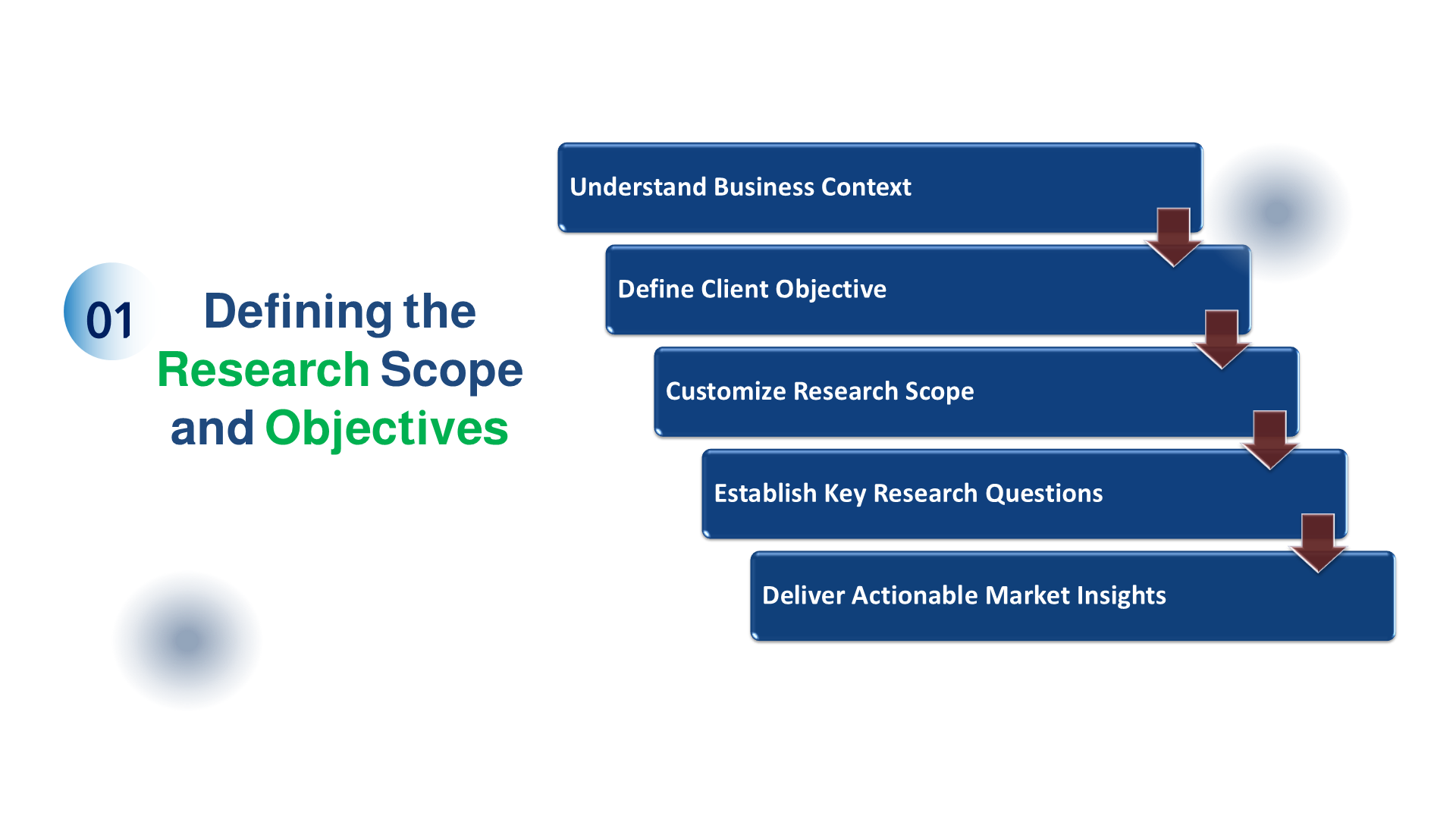
1.1. Market Segmentation & Scope
1.2. Market Definition
1.3. Information Procurement
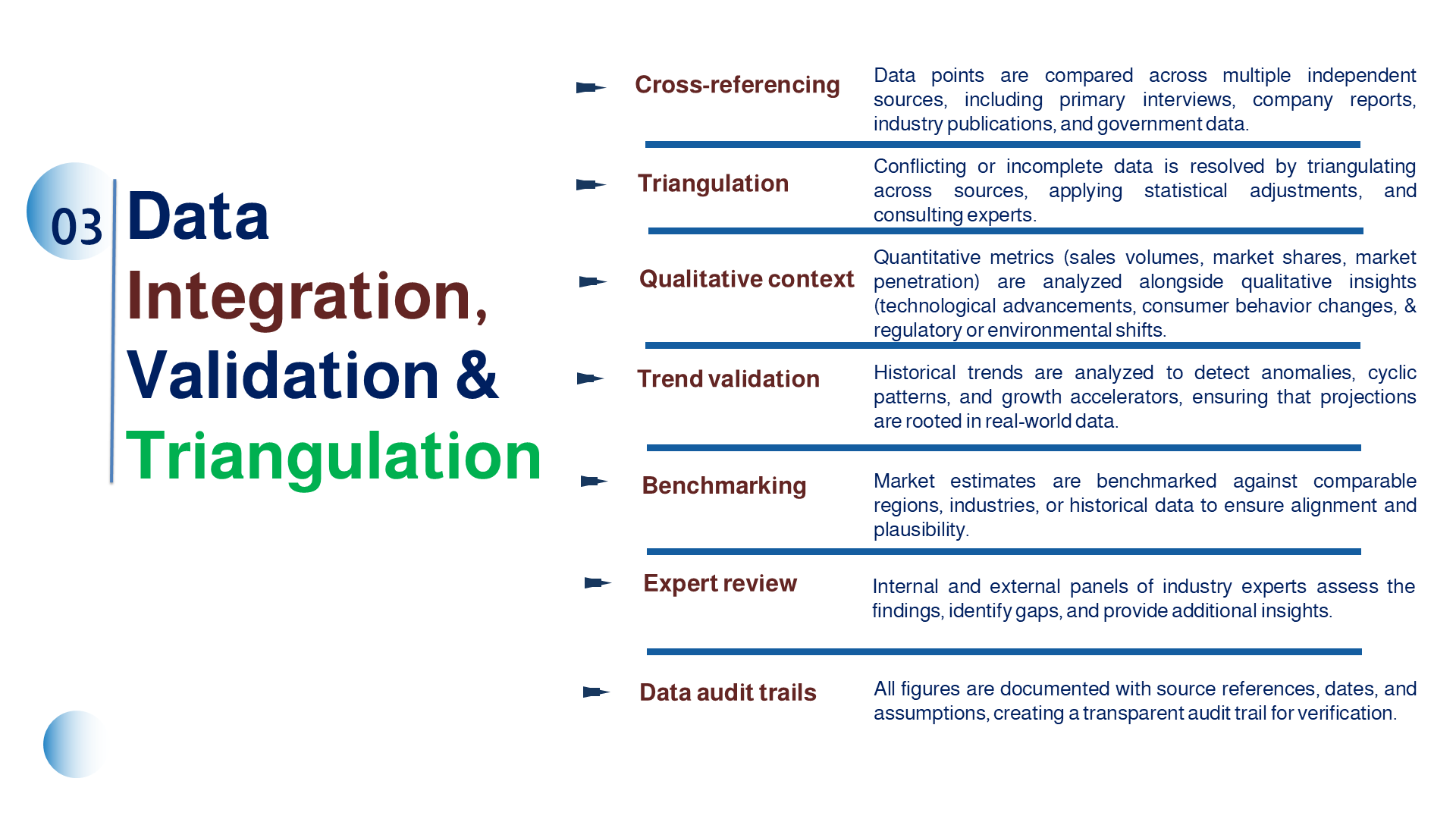
1.3.1 Information Analysis
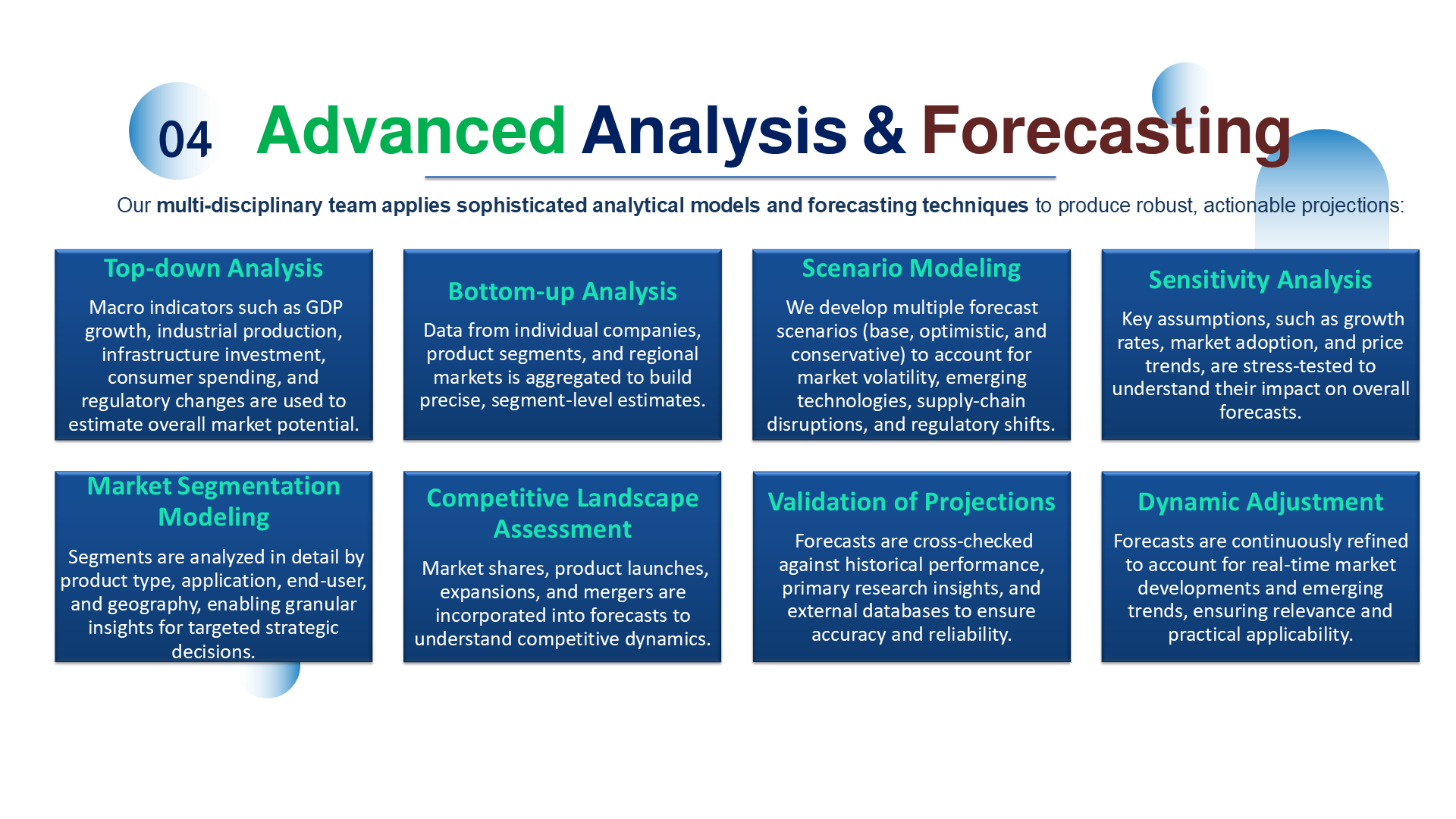
1.3.2 Market Formulation & Data Visualization
1.3.3 Data Validation & Publishing
1.4. Research Scope and Assumptions
1.4.1 List of Data Sources
Chapter 2. EXECUTIVE SUMMARY
2.1. Market Snapshot
2.2. Segmental Outlook
2.3. Competitive Outlook
Chapter 3. MARKET VARIABLES, TRENDS, FRAMEWORK
3.1. Market Lineage Outlook
3.2. Penetration & Growth Prospect Mapping
3.3. Value Chain Analysis
3.4. Regulatory Framework
3.4.1 Standards & Compliance
3.4.2 Regulatory Impact Analysis
3.5. Market Dynamics
3.5.1 Market Drivers
3.5.2 Market Restraints
3.5.3 Market Opportunities
3.5.4 Market Challenges
3.6. Porter's Five Forces Analysis
3.7. PESTLE Analysis
Chapter 4. GLOBAL AI PROCESSOR MARKET: BY PROCESSOR TYPE 2022-2034 (USD MN)
4.1. Market Analysis, Insights and Forecast Processor Type
4.2. Graphics Processing Units Estimates and Forecasts By Regions 2022-2034 (USD MN)
4.3. Application-Specific Integrated Circuits Estimates and Forecasts By Regions 2022-2034 (USD MN)
4.4. Tensor Processing Units Estimates and Forecasts By Regions 2022-2034 (USD MN)
4.5. Field-Programmable Gate Arrays Estimates and Forecasts By Regions 2022-2034 (USD MN)
4.6. Neural Processing Units Estimates and Forecasts By Regions 2022-2034 (USD MN)
4.7. Artificial Intelligence Accelerators Estimates and Forecasts By Regions 2022-2034 (USD MN)
Chapter 5. GLOBAL AI PROCESSOR MARKET: BY DEPLOYMENT MODE 2022-2034 (USD MN)
5.1. Market Analysis, Insights and Forecast Deployment Mode
5.2. Cloud Or Data Center Estimates and Forecasts By Regions 2022-2034 (USD MN)
5.3. Edge Or On-Device Estimates and Forecasts By Regions 2022-2034 (USD MN)
Chapter 6. GLOBAL AI PROCESSOR MARKET: BY APPLICATION 2022-2034 (USD MN)
6.1. Market Analysis, Insights and Forecast Application
6.2. Image Processing And Recognition Estimates and Forecasts By Regions 2022-2034 (USD MN)
6.3. Natural Language Processing Estimates and Forecasts By Regions 2022-2034 (USD MN)
6.4. Machine Learning Estimates and Forecasts By Regions 2022-2034 (USD MN)
6.5. Deep Learning Estimates and Forecasts By Regions 2022-2034 (USD MN)
6.6. Predictive Analytics Estimates and Forecasts By Regions 2022-2034 (USD MN)
Chapter 7. GLOBAL AI PROCESSOR MARKET: BY END-USER INDUSTRY 2022-2034 (USD MN)
7.1. Market Analysis, Insights and Forecast End-user Industry
7.2. Information Technology (IT) And Telecom Estimates and Forecasts By Regions 2022-2034 (USD MN)
7.3. Automotive Estimates and Forecasts By Regions 2022-2034 (USD MN)
7.4. Consumer Electronics Estimates and Forecasts By Regions 2022-2034 (USD MN)
7.5. Healthcare Estimates and Forecasts By Regions 2022-2034 (USD MN)
7.6. Banking, Financial Services, And Insurance Estimates and Forecasts By Regions 2022-2034 (USD MN)
7.7. Industrial Estimates and Forecasts By Regions 2022-2034 (USD MN)
Chapter 8. GLOBAL AI PROCESSOR MARKET: BY REGION 2022-2034 (USD MN)
8.1. Regional Outlook
8.2. North America Market Analysis, Insights and Forecast, 2022-2034 (USD MN)
8.2.1 By Processor Type
8.2.2 By Deployment Mode
8.2.3 By Application
8.2.4 By End-user Industry
8.2.5 United States
8.2.6 Canada
8.2.7 Mexico
8.3. Europe Market Analysis, Insights and Forecast, 2022-2034 (USD MN)
8.3.1 By Processor Type
8.3.2 By Deployment Mode
8.3.3 By Application
8.3.4 By End-user Industry
8.3.5 United Kingdom
8.3.6 France
8.3.7 Germany
8.3.8 Italy
8.3.9 Spain
8.3.10 Russia
8.3.11 Rest Of Europe
8.4. Asia-Pacific Market Analysis, Insights and Forecast, 2022-2034 (USD MN)
8.4.1 By Processor Type
8.4.2 By Deployment Mode
8.4.3 By Application
8.4.4 By End-user Industry
8.4.5 China
8.4.6 Japan
8.4.7 South Korea
8.4.8 India
8.4.9 Australia
8.4.10 South East Asia
8.4.11 Rest Of Asia Pacific
8.5. Latin America Market Analysis, Insights and Forecast, 2022-2034 (USD MN)
8.5.1 By Processor Type
8.5.2 By Deployment Mode
8.5.3 By Application
8.5.4 By End-user Industry
8.5.5 Brazil
8.5.6 Argentina
8.5.7 Peru
8.5.8 Chile
8.5.9 Rest of Latin America
8.6. Middle East & Africa Market Analysis, Insights and Forecast, 2022-2034 (USD MN)
8.6.1 By Processor Type
8.6.2 By Deployment Mode
8.6.3 By Application
8.6.4 By End-user Industry
8.6.5 Saudi Arabia
8.6.6 UAE
8.6.7 Israel
8.6.8 South Africa
8.6.9 Rest of the Middle East And Africa
Chapter 9. COMPETITIVE LANDSCAPE
9.1. Recent Developments
9.2. Company Categorization
9.3. Supply Chain & Channel Partners (based on availability)
9.4. Market Share & Positioning Analysis (based on availability)
9.5. Vendor Landscape (based on availability)
9.6. Strategy Mapping
Chapter 10. COMPANY PROFILES OF GLOBAL AI PROCESSOR INDUSTRY
10.1. Top Companies Market Share Analysis
10.2. Company Profiles (Overview, Services, Financials (based on availability), Recent Developments,
Strategies, SWOT, Etc.)
10.2.1 Samsung Electronics Co. Ltd
10.2.2 Apple Inc
10.2.3 Google LLC
10.2.4 Huawei Technologies Co. Ltd
10.2.5 IBM Corporation
10.2.6 Broadcom Inc
10.2.7 NVIDIA Corporation
10.2.8 Intel Corporation
10.2.9 Qualcomm Incorporated
10.2.10 SK Hynix Inc
10.2.11 Advanced Micro Devices Inc
10.2.12 Micron Technology Inc
10.2.13 NXP Semiconductors N.V
10.2.14 Imagination Technologies Group Plc
10.2.15 Groq Inc
10.2.16 Cambricon Technologies Corporation Limited
10.2.17 Ceva Inc
10.2.18 Tenstorrent Inc
10.2.19 Cerebras Systems Inc
10.2.20 Axelera AI
LIST OF TABLES
- Market Snapshot
- Segment Outlook
- Competitive Outlook
- Market Analysis By Processor Type-2022-2034 (USD MN)
- Graphics Processing Units Market Size By Geography (USD MN)
- Application-Specific Integrated Circuits Market Size By Geography (USD MN)
- Tensor Processing Units Market Size By Geography (USD MN)
- Field-Programmable Gate Arrays Market Size By Geography (USD MN)
- Neural Processing Units Market Size By Geography (USD MN)
- Artificial Intelligence Accelerators Market Size By Geography (USD MN)
- Market Analysis By Deployment Mode-2022-2034 (USD MN)
- Cloud Or Data Center Market Size By Geography (USD MN)
- Edge Or On-Device Market Size By Geography (USD MN)
- Market Analysis By Application-2022-2034 (USD MN)
- Image Processing And Recognition Market Size By Geography (USD MN)
- Natural Language Processing Market Size By Geography (USD MN)
- Machine Learning Market Size By Geography (USD MN)
- Deep Learning Market Size By Geography (USD MN)
- Predictive Analytics Market Size By Geography (USD MN)
- Market Analysis By End-user Industry-2022-2034 (USD MN)
- Information Technology (IT) And Telecom Market Size By Geography (USD MN)
- Automotive Market Size By Geography (USD MN)
- Consumer Electronics Market Size By Geography (USD MN)
- Healthcare Market Size By Geography (USD MN)
- Banking, Financial Services, And Insurance Market Size By Geography (USD MN)
- Industrial Market Size By Geography (USD MN)
- Global AI Processor Market Sales By Geography-2022-2034 (USD MN)
- North America Market Analysis (USD MN)
- United States Market Analysis (USD MN)
- Canada Market Analysis (USD MN)
- Mexico Market Analysis (USD MN)
- Europe Market Analysis (USD MN)
- United Kingdom Market Analysis (USD MN)
- France Market Analysis (USD MN)
- Germany Market Analysis (USD MN)
- Italy Market Analysis (USD MN)
- Russia Market Analysis (USD MN)
- Spain Market Analysis (USD MN)
- Rest of Europe Market Analysis (USD MN)
- Asia Pacific Market Analysis (USD MN)
- China Market Analysis (USD MN)
- Japan Market Analysis (USD MN)
- India Market Analysis (USD MN)
- South Korea Market Analysis (USD MN)
- Australia Market Analysis (USD MN)
- South East Asia Market Analysis (USD MN)
- Rest of Asia Pacific Market Analysis (USD MN)
- Latin America Market Analysis (USD MN)
- Brazil Market Analysis (USD MN)
- Argentina Market Analysis (USD MN)
- Peru Market Analysis (USD MN)
- Chile Market Analysis (USD MN)
- Rest of Latin America Market Analysis (USD MN)
- Middle East & Africa Market Analysis (USD MN)
- Saudi Arabia Market Analysis (USD MN)
- UAE Market Analysis (USD MN)
- Israel Market Analysis (USD MN)
- South Africa Market Analysis (USD MN)
- Rest of Middle East and Africa Market Analysis (USD MN)
- Partnership/Collaboration/Agreement
- Mergers And Acquisition
LIST OF FIGURES
- Research Scope of Global AI Processor Report
- Market Research Process
- Market Research Methodology
- Global AI Processor Market Size, By Regions (USD MN)
- Porters Five Forces Analysis
- PESTLE Analysis
- Market Attractiveness Analysis
- Value Chain Analysis
- Global Market Analysis By Processor Type-2022-2034(USD MN)
- Graphics Processing Units Market Sales By Geography (USD MN)
- Application-Specific Integrated Circuits Market Sales By Geography (USD MN)
- Tensor Processing Units Market Sales By Geography (USD MN)
- Field-Programmable Gate Arrays Market Sales By Geography (USD MN)
- Neural Processing Units Market Sales By Geography (USD MN)
- Artificial Intelligence Accelerators Market Sales By Geography (USD MN)
- Global Market Analysis By Deployment Mode-2022-2034(USD MN)
- Cloud Or Data Center Market Sales By Geography (USD MN)
- Edge Or On-Device Market Sales By Geography (USD MN)
- Global Market Analysis By Application-2022-2034(USD MN)
- Image Processing And Recognition Market Sales By Geography (USD MN)
- Natural Language Processing Market Sales By Geography (USD MN)
- Machine Learning Market Sales By Geography (USD MN)
- Deep Learning Market Sales By Geography (USD MN)
- Predictive Analytics Market Sales By Geography (USD MN)
- Global Market Analysis By End-user Industry-2022-2034(USD MN)
- Information Technology (IT) And Telecom Market Sales By Geography (USD MN)
- Automotive Market Sales By Geography (USD MN)
- Consumer Electronics Market Sales By Geography (USD MN)
- Healthcare Market Sales By Geography (USD MN)
- Banking, Financial Services, And Insurance Market Sales By Geography (USD MN)
- Industrial Market Sales By Geography (USD MN)
- Global Market Sales-2022-2034 (USD MN)
- North America Market Sales-2022-2034 (USD MN)
- Europe Market Sales-2022-2034 (USD MN)
- Asia Pacific Market Sales-2022-2034 (USD MN)
- Latin America Market Sales-2022-2034 (USD MN)
- Middle East & Africa Market Sales-2022-2034 (USD MN)
- Recent Development in Industry
- Top Company Market Share Analysis